
Your Home Exercise Program After a Car Accident
The exercises your therapist gives you to do between visits — your home exercise program — are where most of your recovery repetitions happen. Here's how a good one is built and progressed.
PT Near Me
Florida-licensed in-home physical therapy team
What a home exercise program is
A home exercise program — usually shortened to HEP in your paperwork — is the set of exercises your physical therapist prescribes for the days between visits. It's drawn from the same plan of care that governs your visits, so what you do at home and what you do with the therapist are working toward the same goals.
In in-home physical therapy, the HEP has an extra advantage: the therapist designs it around the space, equipment, and daily routine you actually have. There's no "do this at a gym" handout that doesn't match your life — the program is built for your kitchen counter, your hallway, your work-from-home setup.
How a program gets built after a crash
Your therapist builds the program from the evaluation: which movements hurt, which are limited, which muscles are guarding or weak. Crash injuries — whiplash, back strain, joint injuries — each call for different starting points, so two patients with "rear-end collision" on their charts can have completely different programs.
- Start where you are. Early exercises are deliberately gentle — the goal is controlled movement without flare-ups, not heroics.
- Every exercise has a reason. A good HEP has no filler. If you can't tell what an exercise is for, ask — the answer should connect to one of your goals.
- You'll be shown, not handed a sheet. Expect your therapist to demonstrate each exercise and watch you do it before it lands on your program.
The core categories in a crash-recovery program
Most home programs after a car accident draw from three categories, mixed according to your injury and stage of recovery:
| Category | What it targets | Typical role early vs. late in recovery |
|---|---|---|
| Range of motion | Restoring comfortable movement in stiff or guarded joints and muscles | Usually the foundation early on; maintained throughout |
| Strengthening | Rebuilding strength in muscles that weakened from guarding or disuse | Progresses gradually as symptoms allow; becomes the focus later |
| Movement and posture retraining | Re-learning the daily movement patterns the crash disrupted | Woven in from the start and refined as you improve |
For specific, condition-focused examples, see the related stretch guides linked at the end of this article — they cover sciatica and lower-back routines in detail. This article stays at the program level, because the right exercises for your injury are the ones your own therapist selected.
A note on whiplash exercises
Whiplash deserves its own mention, because it's the most common crash injury patients ask about. Home programs for whiplash typically start with gentle, controlled range-of-motion work for the neck — small, comfortable movements rather than aggressive stretching — and progress toward posture and movement retraining as symptoms allow.
The standard caveat matters here: neck programs that go too hard too early can set recovery back. The progression your therapist chooses — and the pace they advance it — is based on your re-evaluations, not a generic protocol. What recovery from whiplash generally looks like, timeline included, is covered in Whiplash after a Florida car accident.
How the program changes as you recover
A home exercise program that never changes is a sign no one is paying attention. Expect updates as you progress — different exercises, harder variations, more load — to keep pace with what your body can handle. Formal re-evaluations are the scheduled checkpoints, but informal adjustments happen at visits whenever your progress warrants them.
The other half of the deal is doing it. The hours between visits are where most of your recovery repetitions happen, and consistent home programs are what let visits focus on progression instead of repetition.
Frequently asked questions
- What is a home exercise program (HEP)?
- The set of exercises your physical therapist prescribes for the days between visits. It's part of your plan of care, designed for your specific injury and the space and equipment you actually have at home.
- What kinds of exercises are in a program after a car accident?
- Usually a mix of three categories: range-of-motion work for stiff or guarded areas, strengthening as symptoms allow, and movement or posture retraining. The exact mix depends on your injury and stage of recovery.
- What exercises help whiplash?
- Whiplash programs typically begin with gentle, controlled neck range-of-motion work and progress toward posture and movement retraining. The pace should be set by your own therapist based on your re-evaluations — pushing too hard too early can set recovery back.
- How often will my home program change?
- As you progress. A program that doesn't evolve is a warning sign. Formal re-evaluations are the scheduled checkpoints, and your therapist can adjust the program at any visit.
- What should I do if an exercise hurts?
- Stop that exercise and report it at your next visit — or sooner if the pain is severe. Discomfort during prescribed exercise can be normal, but sharp or worsening pain is a signal to adjust the program, not to push through.
- Can I exercise on my own without a program from a therapist?
- After a car accident, it's safest to work from a program designed for your actual injury. Generic routines can miss what's injured — or aggravate it — and an evaluation is what tells you which category you're in.
Related articles
- In-Home PT
What to Expect at Your First In-Home Physical Therapy Visit
A minute-by-minute breakdown of what happens at your first in-home physical therapy visit after a Florida car accident — what the therapist brings, how the evaluation works, and what you should have ready.
PT Near Me · June 23, 2026
- Recovering After a Crash
Whiplash After a Florida Car Accident: What to Expect in Recovery
Most whiplash recovers within 6 to 12 weeks with early, active physical therapy. A smaller share develops persistent symptoms past three months. Here's what whiplash actually is, what the realistic timeline looks like, and how PT should approach it after a crash in Florida.
PT Near Me · June 21, 2026
- PT Basics & Glossary
Sciatica Stretches That Actually Work: A PT's Guide
Sciatica pain almost always calms down faster with the right stretches done in the right order — nerve glides first, then hip and low-back mobility, then core stability. Here is the safe, step-by-step routine a physical therapist would give you at a first visit.
PT Near Me · July 1, 2026
In your city
Conditions we treat across Florida
Each guide below covers the clinical evidence, recovery timelines, and coverage details specific to these conditions.
Don’t see your city? View all Florida service areas.
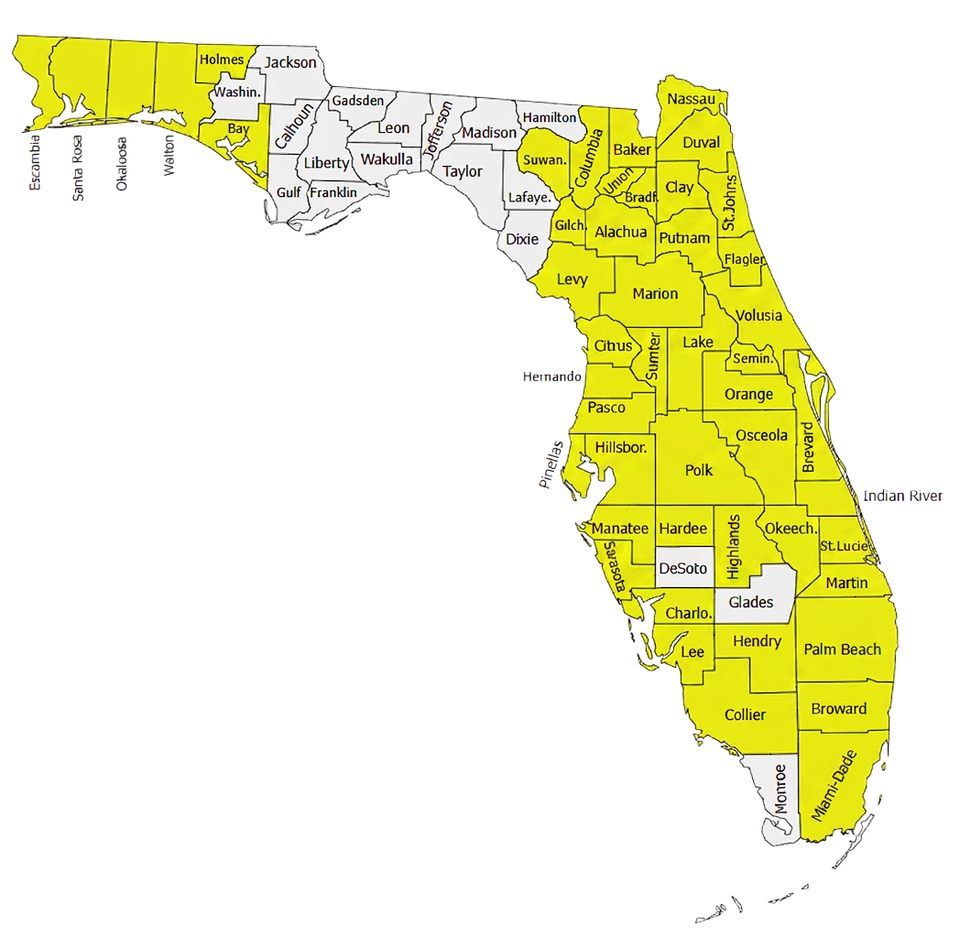
Florida-licensed physical therapists covering 50+ counties in Florida.
Our clinicians reach major metros and rural communities alike — from the Panhandle to the Keys. Patients are typically seen at home or at their workplace within 48 hours of a complete referral.
- Clinicians on our team
- Statewide
- Florida counties covered
- 50+
Need to refer a Florida patient?
Our intake team confirms auto insurance coverage during the call and schedules most patients at home or at their workplace within 48 hours.