
Sciatica Stretches That Actually Work: A PT's Guide
Sciatica pain almost always calms down faster with the right stretches done in the right order — nerve glides first, then hip and low-back mobility, then core stability. Here is the safe, step-by-step routine a physical therapist would give you at a first visit.
PT Near Me
Florida-licensed in-home physical therapy team
What sciatica actually is
Sciatica is the general term for pain that travels along the path of the sciatic nerve — the largest nerve in the body — which runs from the lower back, through the buttock, and down the back of the leg. The National Institute of Neurological Disorders and Stroke defines sciatica as pain caused by compression or irritation of one of the nerve roots that form the sciatic nerve, most often at the L4, L5, or S1 level of the spine.
That distinction matters because "sciatica stretches" is a search term, not a diagnosis. The stretch that helps a patient with a bulging disc pinching the L5 nerve root is different from the stretch that helps a patient with a tight piriformis muscle squeezing the sciatic nerve as it exits the pelvis. Both feel like sciatica; both need a different starting point.
| Source | How it happens | What tends to help |
|---|---|---|
| Lumbar disc irritation | Bulging or herniated disc pressing on a nerve root | Nerve glides, gentle extension, avoiding prolonged forward bending |
| Piriformis / deep gluteal syndrome | Tight or spasmed piriformis compressing the sciatic nerve | Figure-4 stretch, glute release, hip external-rotator strengthening |
| Facet joint / stenosis | Narrowing of the space nerve roots exit through | Knee-to-chest, flexion-biased stretches, core stability |
Red flags — stop and see a physician first
Almost all sciatica is safe to stretch. A small fraction is not. Do not start any stretching program if any of the following are present — call a physician or, for the last one, go to the emergency department:
- Progressive weakness in the leg (foot drop, difficulty pushing off the toes).
- Numbness in the groin or inner thighs (saddle anesthesia).
- Loss of bowel or bladder control, or difficulty urinating.
- Fever, unexplained weight loss, or a history of cancer with new back pain.
- Pain that is severe at night, unrelieved by any position.
How to stretch a nerve (without making it angrier)
Nerves do not like the same treatment muscles do. A muscle responds well to a sustained 30-second hold at the edge of its length. A nerve responds badly to that — sustained tension on an already-irritated nerve reproduces the exact symptoms you are trying to calm.
The right approach is called nerve flossing or nerve gliding: moving the nerve gently through its full range, back and forth, without ever holding it at end range. Think of it as bringing a garden hose through a tight corner — smooth, slow passes, not yanking it taut.
- Stop short of the tingling or shooting pain. The goal is movement, not tension.
- Slow — 2–3 seconds each direction, 10 reps, 2–3 times per day.
- If symptoms increase during or within an hour after, back off. Try again the next day with a smaller range.
- Never push through numbness or worsening leg pain to 'stretch it out.' That is the wrong signal.
The four sciatica stretches that actually work
1. Sciatic nerve glide (flossing)
Sit tall in a chair with both feet flat. Straighten the affected leg out in front of you while pulling your toes up toward your face and looking up at the ceiling at the same time. Then bend the knee back down while pointing the toes and looking down at your lap. That is one rep. Do 10 slow reps, 2–3 times per day. You should feel a gentle pulling — never a sharp shoot down the leg.
2. Figure-4 piriformis stretch
Lie on your back with both knees bent, feet flat. Cross the ankle of the affected leg over the opposite knee, making a figure-4. Reach through and grab the back of the opposite thigh, gently pulling it toward your chest until you feel a stretch deep in the buttock of the affected side. Hold 30 seconds, breathe, repeat 3 times. This one is a true muscle stretch — a sustained hold is fine here.
3. Single knee-to-chest
Lie on your back with both legs long. Bring one knee up toward your chest and hug it with both hands, letting the low back gently round into the floor. Hold 30 seconds, then switch sides. This decompresses the lumbar facet joints and is especially useful when standing and walking make the sciatica worse (a pattern often seen with spinal stenosis).
4. Cat–cow
On hands and knees, slowly alternate between arching your back up like a cat (drop your head, tuck your tailbone) and letting your belly sag toward the floor (lift your head and tailbone). 10 slow reps. Cat–cow moves the entire lumbar spine through its range without loading it, and gives the nerve roots room to move.
Stretches to avoid while your sciatica is flared
A handful of common stretches routinely make sciatica worse — not because they are bad exercises, but because they load an irritated nerve at exactly the wrong angle.
- Standing toe-touches. Long-lever forward bending under gravity is the classic disc-aggravating position.
- Seated hamstring stretches with a straight leg and rounded back. This is a full-tension sciatic nerve stretch, held long — the opposite of what an irritated nerve wants.
- Deep twisting yoga poses in the first two weeks. Rotation plus flexion is a common flare-up trigger for disc-related sciatica.
- Aggressive hip openers like deep pigeon, held for minutes. Fine later; too much at the start.
Why stretching alone usually is not enough
Stretching calms symptoms. It rarely fixes the underlying pattern that caused sciatica in the first place. Almost every long-term sciatica program also includes:
- Hip strength — especially the glutes and deep hip external rotators. Weak hips force the low back to do work it is not built for.
- Core endurance — planks, side planks, dead bugs, bird dogs. Endurance matters more than raw strength for spine protection.
- Posture and movement retraining — how you sit at a desk, how you get out of a car, how you pick something up off the floor.
- Aerobic activity — regular walking has some of the best evidence of any single intervention for chronic low back pain.
A physical therapy evaluation puts these pieces in the right order for your specific case. For patients in Florida recovering from a car accident, sciatica is a common presentation — see the whiplash and post-crash injuries guide and the Florida car-accident recovery guide for how PT fits into the overall recovery plan.
When to get a physical therapist involved
The honest answer: sooner than most people do. The average patient waits weeks of at-home stretching before seeking care, by which time compensations have settled in — a shifted posture, weakened glutes, a guarded gait — that then take longer to unwind than the original nerve irritation.
Consider a physical therapy evaluation if your sciatica has lasted more than two weeks, if it is affecting your sleep or work, or if you are not sure which of the three drivers above is causing your symptoms. Florida residents can start in-home physical therapy without leaving the house — see what to expect at the first in-home PT visit.
Frequently asked questions
- How long should I stretch for sciatica each day?
- Two short sessions of 10–15 minutes each — one in the morning, one in the evening — beats a single long session. Nerve glides can be done more often (3–4 times a day, 10 reps) because they are movement, not sustained tension.
- Is walking good for sciatica?
- For most people, yes. Regular walking on flat ground is one of the best-tolerated activities for sciatica and has strong evidence for chronic low back pain generally. If walking makes the symptoms shoot down the leg, shorten the distance and check with a physical therapist.
- How long does sciatica usually take to go away?
- Most non-red-flag sciatica improves substantially in 4–8 weeks with the right combination of stretching, nerve mobility work, hip strengthening, and activity. A minority of cases take longer or need imaging and physician co-management.
- Can I make sciatica worse by stretching?
- Yes — long-hold hamstring stretches, forward bends, and aggressive twists during a flare-up are the most common offenders. If a stretch reproduces shooting pain or leaves symptoms worse an hour later, stop that stretch and try a nerve-glide-based routine instead.
Related articles
- PT Basics & Glossary
The Ultimate Physical Therapy Cheat Sheet for Patients and Clinicians
A practical reference for how good PT works: evaluation, SOAP notes, SMART goals, common treatments, and the documentation patients have every right to ask for.
PT Near Me · June 22, 2026
- In-Home PT
What to Expect at Your First In-Home Physical Therapy Visit
A minute-by-minute breakdown of what happens at your first in-home physical therapy visit in Florida — what the therapist brings, how the evaluation works, and what you should have ready.
PT Near Me · June 23, 2026
- Recovering After a Crash
Whiplash After a Florida Car Accident: What to Expect in Recovery
Most whiplash recovers within 6 to 12 weeks with early, active physical therapy. A smaller share develops persistent symptoms past three months. Here's what whiplash actually is, what the realistic timeline looks like, and how PT should approach it after a crash in Florida.
PT Near Me · June 21, 2026
In your city
Conditions we treat across Florida
Each guide below covers the clinical evidence, recovery timelines, and coverage details specific to these conditions.
Don’t see your city? View all Florida service areas.
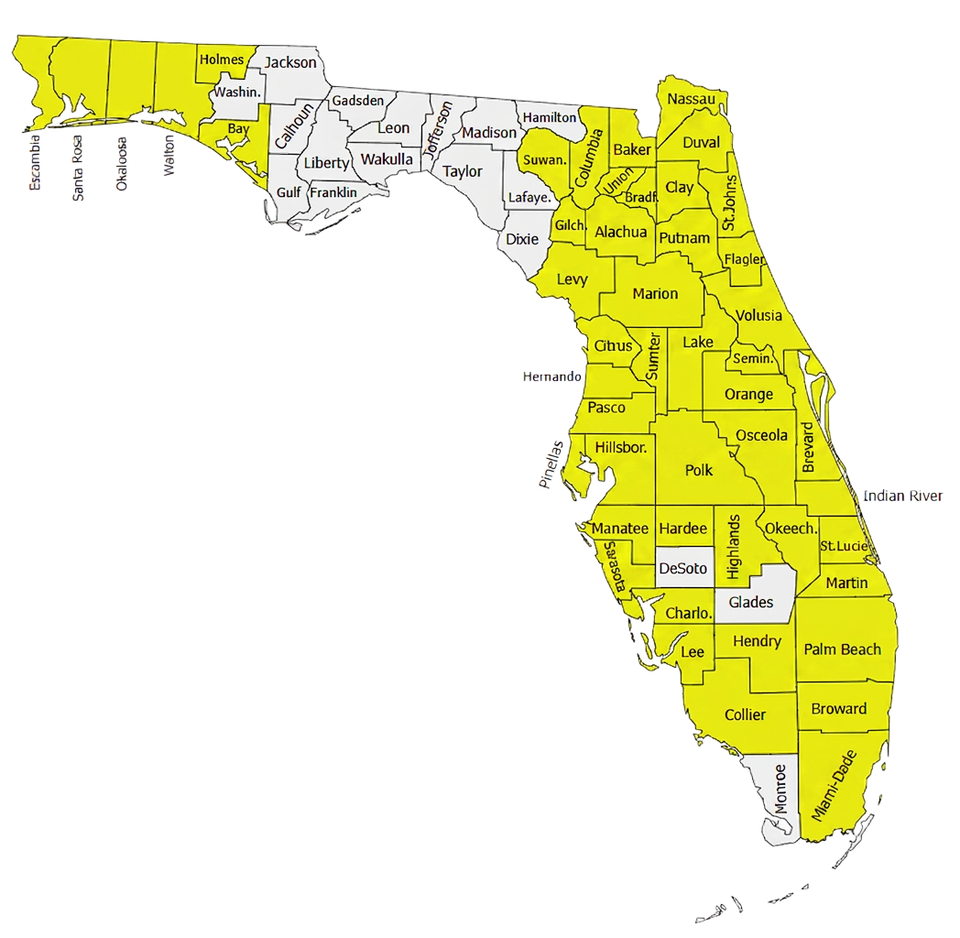
Florida-licensed physical therapists covering 50+ counties in Florida.
Our clinicians reach major metros and rural communities alike — from the Panhandle to the Keys. Patients are typically seen at home or at their workplace within 48 hours of a complete referral.
- Clinicians on our team
- Statewide
- Florida counties covered
- 50+
Need to refer a Florida patient?
Our intake team confirms auto insurance coverage during the call and schedules most patients at home or at their workplace within 48 hours.