
Lower Back Stretches: A Physical Therapist's Safe Routine
The best lower back stretches are the ones that match your pain pattern — flexion-biased for stiffness with standing, extension-biased for pain with sitting, and neutral mobility work for everything in between. Here is a physical therapist's safe daily routine and the mistakes to avoid.
PT Near Me
Florida-licensed in-home physical therapy team
Why the lower back is the most-stretched part of the body
Low back pain is the single most common musculoskeletal complaint worldwide. The World Health Organization reports that roughly 619 million people were living with low back pain in 2020, and that the number is expected to rise to 843 million by 2050. Most of it is non-specific — no single disc, joint, or muscle is the villain — and most of it responds to movement.
That said, "stretching" is a broad instruction. The lumbar spine has two dominant movement directions — flexion (bending forward) and extension (arching back) — and the stretch that relieves one person's pain can flare up another's. The right routine starts with a two-minute self-check.
Which pattern is your back?
Try this quick screen before you start any stretch. It borrows from the same directional-preference approach physical therapists use in clinic.
| What makes it worse | Likely pattern | Best-tolerated bias |
|---|---|---|
| Prolonged sitting, bending forward, coughing | Extension-responder (often disc-related) | Prone press-ups, standing back-bends, walking |
| Prolonged standing, walking downhill, arching back | Flexion-responder (often facet or stenosis) | Knee-to-chest, child's pose, seated hamstring mobility |
| Nothing consistent — general morning stiffness | Non-specific / mobility-limited | Cat-cow, hip mobility, figure-4, daily walking |
The five-stretch daily routine
This is the routine we teach at first in-home PT visits for straightforward non-specific low back pain. It takes about 10 minutes, works for most patterns, and can be done on a bed or a rug.
1. Single knee-to-chest
Lie on your back, legs long. Bring one knee up toward your chest, hug it, and let your low back gently round into the floor. Hold 20–30 seconds, switch sides. 2–3 rounds each. Great for morning stiffness and for anyone whose pain is worse with standing.
2. Cat–cow
On hands and knees. Slowly arch the back up like a cat (head drops, tailbone tucks), then let the belly sag as you lift your head and tailbone. 10 slow reps. This is the single most useful mobility drill for the lumbar spine — it moves every level a little without loading any of them.
3. Child's pose
From hands and knees, sit your hips back toward your heels, arms reaching forward, forehead resting toward the floor. Hold 30–60 seconds, breathing slowly. Widen the knees if the belly gets in the way. This is a gentle full-length flexion stretch for the lumbar erectors, lats, and thoracolumbar fascia.
4. Prone press-up
Lie face down. Place your hands under your shoulders and slowly press your chest up while keeping your hips heavy on the floor — like a gentle cobra. Go only as high as you can without pinching. Hold 2 seconds at the top, lower, repeat 10 times. This is the classic extension-biased stretch. If you are an 'extension-responder' from the table above, this is the single best stretch you can do. If it makes leg symptoms worse, skip it.
5. Figure-4 stretch
On your back, cross one ankle over the opposite knee. Reach through and pull the bottom thigh toward your chest until you feel a stretch deep in the outer hip and buttock. Hold 30 seconds, switch. Tight deep hip rotators are a huge driver of low back pain — a strong glute needs a mobile hip underneath it.
The four form mistakes that hurt more than they help
- Bouncing. Ballistic stretching irritates rather than lengthens. Move to end range, hold, breathe.
- Holding your breath. Bracing during a stretch defeats the purpose. Slow nasal breathing sets the nervous system to 'safe to relax.'
- Stretching straight out of bed. The lumbar discs are more hydrated and more sensitive in the first 30 minutes after waking — do a few minutes of gentle walking first.
- Chasing intensity. A 4/10 stretch you do daily beats a 9/10 stretch you do once and then avoid for a week.
Stretches to skip during a flare-up
Some popular stretches are fine when you are pain-free but poorly tolerated during a flare:
- Standing toe-touches. Long-lever forward bending under gravity is a classic disc-aggravator.
- Deep twists. Rotation plus flexion, held long, is a common way to flare disc symptoms.
- Aggressive seated hamstring stretches with a rounded back. This is really a lumbar stretch in disguise, and often the wrong one.
- Ballistic hip stretches. Pigeon pose held deep for minutes on a cold hip is a common Monday-morning mistake.
What stretching cannot fix
Stretching addresses symptoms and short-term mobility. It does not build the endurance the lumbar spine actually needs to feel resilient day to day. Almost every effective long-term low back program pairs stretching with:
- Glute and hip strength — bridges, side-lying clamshells, banded walks.
- Core endurance — dead bugs, bird dogs, side planks. Endurance beats raw strength for spine protection.
- A daily walking habit — even 20 minutes has strong evidence for chronic low back pain.
- Sleep and stress hygiene — pain sensitivity rises fast with poor sleep and chronic stress.
For patients recovering from a Florida car accident, low back pain is one of the most common presenting complaints — and it often overlaps with sciatica, whiplash, and hip involvement. See the sciatica stretches guide for nerve-glide work, or the Florida car-accident recovery guide for the full picture.
When to bring in a physical therapist
A physical therapy evaluation is worth doing if your low back pain has lasted more than two to three weeks, if it is interfering with sleep or work, if you cannot tell which pattern (flexion vs. extension) fits you, or if the same episode keeps coming back.
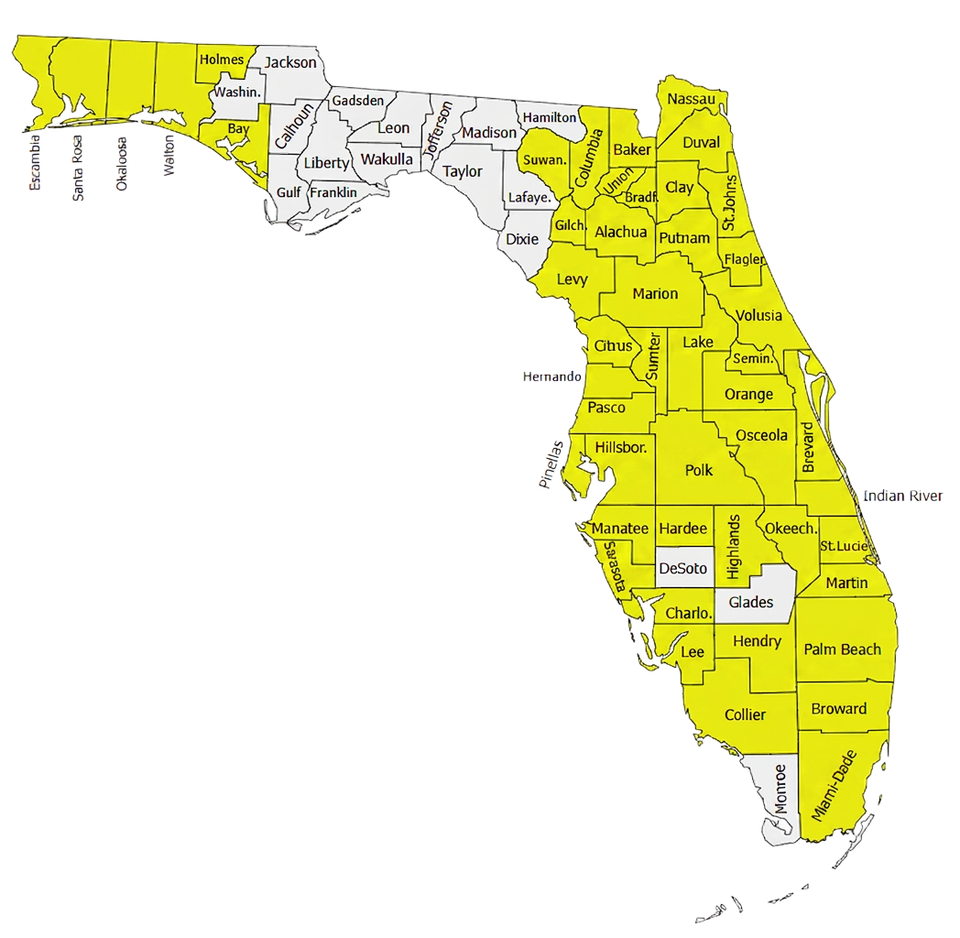
A PT can pinpoint the directional preference in a single visit, catch the small subset of cases that need imaging or a physician referral, and build a program that actually resolves the pattern instead of managing it forever. For patients in Florida, this can happen at home — see what to expect at the first in-home PT visit or browse the Florida service-area map.
Frequently asked questions
- How often should I do lower back stretches?
- Daily is fine, and twice-daily is better than one long session. Ten minutes in the morning to unstick and ten minutes in the evening to unwind is a well-tolerated pattern for most people.
- Is it safe to stretch a low back that is currently sore?
- Usually yes — gentle stretching within a comfortable range is one of the best things you can do during a flare. Sharp pain, shooting symptoms down the leg, or symptoms that worsen for hours after a stretch are the signal to stop that particular stretch and try a different bias (or see a physical therapist).
- Should I stretch before or after exercise?
- For the lumbar spine specifically, save long static stretches for after exercise or as a standalone routine. Before exercise, use mobility drills like cat-cow, hip circles, and a few minutes of easy walking to warm up.
- How long until stretching actually helps my back?
- Most people notice a difference in stiffness and daily comfort within the first week of a consistent routine. Structural changes in mobility and strength take 4–8 weeks. If nothing has changed after two weeks of consistent stretching, the program probably needs adjusting — that is a good moment for a PT evaluation.
Related articles
- PT Basics & Glossary
Sciatica Stretches That Actually Work: A PT's Guide
Sciatica pain almost always calms down faster with the right stretches done in the right order — nerve glides first, then hip and low-back mobility, then core stability. Here is the safe, step-by-step routine a physical therapist would give you at a first visit.
PT Near Me · July 1, 2026
- PT Basics & Glossary
The Ultimate Physical Therapy Cheat Sheet for Patients and Clinicians
A practical reference for how good PT works: evaluation, SOAP notes, SMART goals, common treatments, and the documentation patients have every right to ask for.
PT Near Me · June 22, 2026
- In-Home PT
What to Expect at Your First In-Home Physical Therapy Visit
A minute-by-minute breakdown of what happens at your first in-home physical therapy visit in Florida — what the therapist brings, how the evaluation works, and what you should have ready.
PT Near Me · June 23, 2026
In your city
Conditions we treat across Florida
Each guide below covers the clinical evidence, recovery timelines, and coverage details specific to these conditions.
Don’t see your city? View all Florida service areas.
Florida-licensed physical therapists covering 50+ counties in Florida.
Our clinicians reach major metros and rural communities alike — from the Panhandle to the Keys. Patients are typically seen at home or at their workplace within 48 hours of a complete referral.
- Clinicians on our team
- Statewide
- Florida counties covered
- 50+
Need to refer a Florida patient?
Our intake team confirms auto insurance coverage during the call and schedules most patients at home or at their workplace within 48 hours.