
Neck Pain After a Car Accident: How Long It Lasts and What Helps
Most neck pain after a car accident is a strain of the muscles, joints, and ligaments of the neck, and for many people it settles down over a few weeks. Gentle movement, guided exercise, and an in-person exam early on are what tend to help most.
PT Near Me
Florida-licensed in-home physical therapy team
What neck pain after a crash actually is
In a crash your car changes speed faster than your head does. Your torso is held by the seatbelt while your head snaps forward and back, or side to side. The muscles, joints, and ligaments in the neck are stretched and loaded far past what they handle in normal life. That stretch and strain is what people call whiplash.
Whiplash is not one single injury. It is a group of them: strained neck and shoulder muscles, irritated facet joints at the back of the spine, sprained ligaments, and sometimes irritation of a nerve root. Because the tissues involved are small and deep, the pain can feel much bigger than the injury looks on paper.
- Aching or tightness across the back of the neck and into the shoulders
- Pain that gets worse when you turn your head to check a blind spot
- Headache that starts at the base of the skull
- A feeling that the neck is fragile or unstable
- Poor sleep because no position feels comfortable
Why symptoms can show up a day or two later
It is very common to feel fine at the scene and much worse the next morning. Two things are going on. First, the stress response during and right after a crash raises your pain threshold, so you may not notice much at all. Second, the body's inflammatory response to strained tissue builds over hours. Swelling, muscle guarding, and stiffness are often at their worst 24 to 72 hours after impact.
That delay is normal, and it is one reason people talk themselves out of getting checked. A neck that felt "just a little tight" on the day of the crash can be hard to turn two days later.
What a typical recovery looks like
Recovery varies a lot from person to person, so treat the pattern below as typical rather than expected. Age, prior neck problems, how the crash happened, and sleep quality all change the picture.
| Stage | Often looks like |
|---|---|
| Days 1–3 | Stiffness and soreness build. Turning the head is limited. Headaches are common. |
| Week 1–2 | Pain becomes less constant. Motion starts to return, often in one direction first. |
| Week 3–6 | Many people move close to normally but still flare after long drives or desk work. |
| Beyond 6 weeks | Some people still have symptoms. This is not rare, and it usually calls for a re-examination rather than more rest. |
Red flags that need care right away
Some symptoms are not a strain. Get emergency care or contact a physician the same day if you have any of these:
- Numbness, tingling, or weakness in an arm or hand that does not come and go
- Numbness or weakness in both arms, or in the legs
- Trouble with balance, walking, or fine hand movements like buttoning a shirt
- A severe headache that is different from any you have had before
- Slurred speech, double vision, fainting, or confusion
- Loss of bladder or bowel control
- Midline neck pain that is severe and sharply localized, especially after a high-speed crash
What physical therapy actually does for it
Physical therapy for crash-related neck pain is not heat packs and hope. A therapist examines how much and how well your neck moves, checks the joints segment by segment, screens the nerves in the arms, and looks at how your shoulder blades and mid-back are contributing. That exam drives the plan.
- Restore motion early with gentle range-of-motion work, so the tissue is loaded without being provoked.
- Calm the guarding with hands-on techniques applied to the joints and muscles that reproduce your symptoms.
- Rebuild the deep neck flexors and shoulder-blade muscles that switch off after an injury.
- Retrain everyday positions — driving, phone, laptop, sleeping — because those are what keep symptoms alive.
- Progress load gradually so the neck tolerates work, lifting, and long drives again.
Care should also make sense of your headaches and any arm symptoms rather than treating the neck in isolation. If something in the exam does not fit a musculoskeletal pattern, the right move is a referral back to a physician, not more treatment.
What an in-home visit looks like
A therapist comes to your home with what the visit needs. The first visit is mostly examination and conversation: how the crash happened, what hurts, what you cannot do yet, and what you need to get back to. You will usually start treatment the same visit and leave with two or three specific things to do between visits.
For neck pain there is a real advantage to being seen at home. Your therapist can look at the actual chair you work in, the pillow you sleep on, and the car you drive. Those details are often the difference between a neck that keeps flaring and one that settles.
Frequently asked questions
- How long does neck pain after a car accident usually last?
- Many people improve noticeably within two to six weeks, and some take longer. Because recovery depends on the injury, your history, and how early care starts, no one can promise a date. Symptoms that are not improving after a few weeks are a reason to be re-examined, not a reason to wait longer.
- Why did my neck hurt more the day after the crash?
- The stress response right after a crash masks pain, and the body's inflammatory response builds over hours. Stiffness and soreness often peak 24 to 72 hours after impact.
- Should I wear a soft collar?
- Prolonged collar use is generally discouraged for typical whiplash because it can increase stiffness and weakness. Follow the instructions of the clinician who examined you, especially if imaging was done.
- Is it safe to move my neck if it hurts?
- Gentle, controlled movement within a tolerable range is usually part of care rather than something to avoid. Sharp pain, arm numbness, or weakness are signals to stop and get evaluated.
- When is neck pain after a crash an emergency?
- Numbness or weakness in an arm or leg, trouble walking or balancing, a severe or unfamiliar headache, slurred speech, vision changes, or loss of bladder or bowel control all need same-day medical care.
- Do I need an X-ray or MRI first?
- Not always. A clinician decides based on how the crash happened, your age, your neurological exam, and your symptoms. Imaging is ordered when something in that picture suggests it is needed.
Related articles
- Recovering After a Crash
Symptoms That Show Up Days or Weeks After a Car Accident
It is normal for crash symptoms to appear a day, a week, or even a few weeks later, because adrenaline masks pain and inflammation builds over time. Neck and back stiffness, headaches, numbness, and dizziness are the most common late arrivals, and all of them are worth an in-person exam.
PT Near Me · August 26, 2026
- Recovering After a Crash
Headaches After a Car Accident: Causes, Red Flags, and Treatment
Most headaches after a car accident come from the neck joints and muscles or from a concussion, and the two often overlap. A headache that keeps getting worse, or comes with vomiting, confusion, or weakness, needs same-day medical care.
PT Near Me · August 26, 2026
- Recovering After a Crash
Numbness and Tingling After a Car Accident: What It Means
Numbness or tingling after a crash usually means a nerve is irritated somewhere along its path — most often at a nerve root in the neck or low back, or where the nerve passes through tight tissue. Numbness with weakness, or numbness in both limbs, needs prompt medical evaluation.
PT Near Me · August 26, 2026
In your city
Conditions we treat across Florida
Each guide below covers the clinical evidence, recovery timelines, and coverage details specific to these conditions.
Don’t see your city? View all Florida service areas.
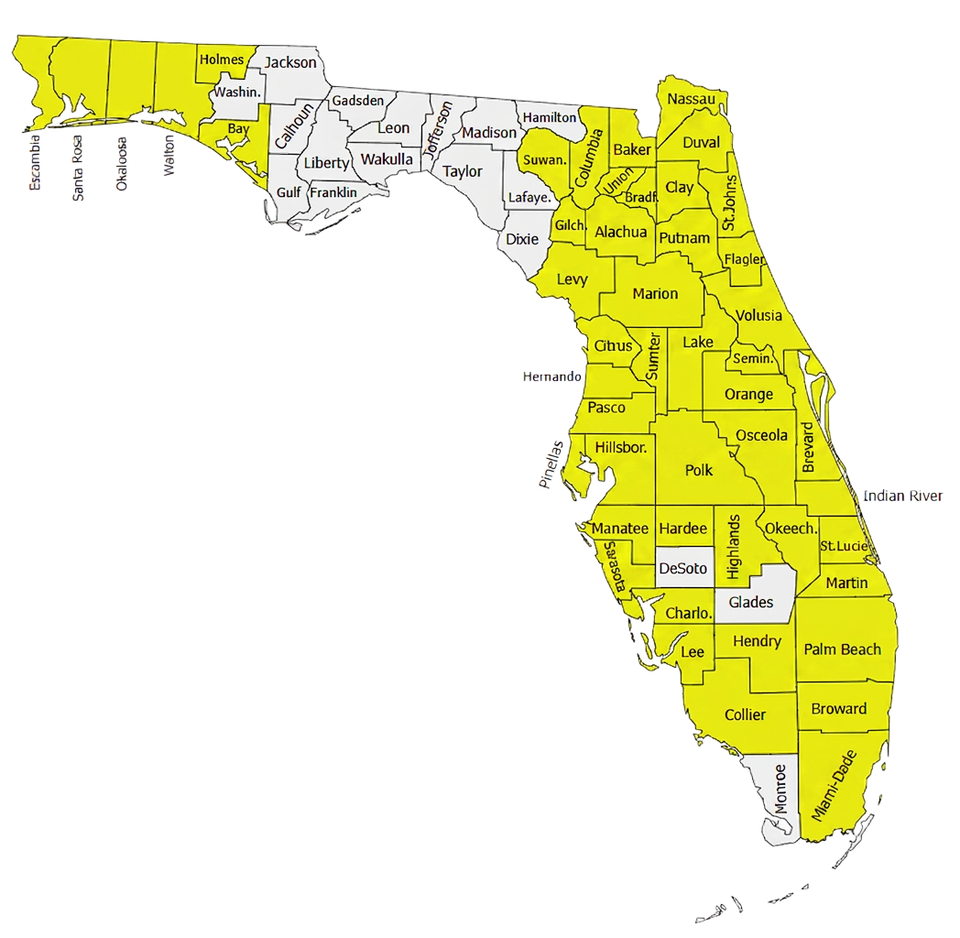
Florida-licensed physical therapists covering 50+ counties in Florida.
Our clinicians reach major metros and rural communities alike — from the Panhandle to the Keys. Patients are typically seen at home or at their workplace within 48 hours of a complete referral.
- Clinicians on our team
- Statewide
- Florida counties covered
- 50+
Need to refer a Florida patient?
Our intake team confirms auto insurance coverage during the call and schedules most patients at home or at their workplace within 48 hours.