
Knee Pain After a Car Accident: Dashboard Injuries Explained
Knee pain after a crash often comes from the knee striking the dash or from bracing hard against the pedals, which can bruise the kneecap, irritate cartilage, or strain a ligament. A knee that cannot bear weight, locks, or gives way should be evaluated before you exercise it.
PT Near Me
Florida-licensed in-home physical therapy team
What gets injured in a dashboard impact
Front-end crashes drive the knee forward into the dash while the foot is planted. That loads the kneecap, the cartilage behind it, and the ligaments that hold the joint together. Drivers who brace hard against the brake pedal can strain the same structures without ever touching the dash.
| Injury | How it feels | Typical clues |
|---|---|---|
| Kneecap bruise | Sore, tender right on the front of the knee | Visible bruising, painful to kneel or press |
| Cartilage irritation behind the kneecap | Aching with stairs, squatting, sitting a long time | Grinding or catching sensation |
| Meniscus irritation or tear | Pain along the joint line, sometimes catching | Swelling that builds over a day, pain twisting |
| Ligament sprain (ACL, PCL, collateral) | Deep pain, feeling of instability | Swelling within hours, giving way, pain side to side |
| Hamstring or quadriceps strain | Pain above or behind the knee with effort | Tender muscle, weak pushing off |
| Fracture | Severe pain, cannot bear weight | Needs imaging — evaluate before rehabilitation |
Why the knee can hurt more later
Knee injuries are often overshadowed at first by neck and back pain. Then swelling builds, the thigh muscle switches off, and the joint stiffens. A knee that felt bruised on day one can be difficult on stairs by day four.
Timing of swelling is a useful clue. Large swelling within the first hour is more concerning than swelling that appears gradually over a day, and it is worth mentioning to whoever examines you.
What recovery typically looks like
- First week: swelling and stiffness dominate. Early, gentle bending and straightening are usually part of care.
- Weeks 2–4: walking normally, stairs improving, thigh strength beginning to return.
- Weeks 4–12: strength and confidence rebuild; kneeling and squatting are often the last to normalize.
- Ligament and meniscus injuries can take considerably longer and sometimes need a specialist's opinion.
Recovery depends on what was injured, so these ranges describe patterns rather than promises.
Red flags that need evaluation first
- You cannot put weight on the leg
- The knee locks and will not fully straighten
- The knee gives way under you
- Large swelling within the first hour after the crash
- Obvious deformity, or the kneecap looks out of place
- Numbness in the foot, a cold or pale foot, or calf pain and swelling
- Fever with a hot, red, swollen knee
What physical therapy does for it
A therapist examines swelling, motion, kneecap mobility, joint-line tenderness, ligament stability, and thigh and hip strength, and screens for the findings that need a physician or imaging first. Then treatment follows what was found.
- Control swelling and restore full bending and straightening early.
- Wake up the quadriceps, which almost always shuts down after a knee injury.
- Rebuild hip and glute strength, since weak hips push more load through the knee.
- Retrain stairs, sit-to-stand, squatting, and getting in and out of a car in a graded way.
- Progress to walking distance, work tasks, and, when relevant, running or lifting.
What an in-home visit looks like
A painful knee and a car are a bad combination, so being treated at home removes the hardest part of getting care. The therapist works on your own stairs, your own chair height, and your own bathroom — the exact tasks that are hard right now — and brings the equipment the visit needs.
Frequently asked questions
- Why does my knee hurt after a car accident?
- Usually because the knee struck the dashboard or because you braced hard against the pedals. That can bruise the kneecap, irritate the cartilage behind it, or strain a ligament or the meniscus.
- How do I know if my knee injury is serious?
- Inability to bear weight, a knee that locks or gives way, large swelling within the first hour, or obvious deformity all suggest a more significant injury and need evaluation before exercise.
- How long does knee pain after a crash last?
- Bruises and mild strains often improve over two to six weeks. Meniscus and ligament injuries can take considerably longer and sometimes need a specialist's input.
- Should I use ice and a brace?
- Short-term ice and compression are commonly used for swelling. Bracing depends on the diagnosis, so follow the instructions of the clinician who examined the knee rather than guessing.
- Can physical therapy help a dashboard knee injury?
- For most bruises, cartilage irritation, and mild to moderate strains, rehabilitation focused on motion, quadriceps and hip strength, and graded return to stairs and walking is a standard part of care. Results vary by injury.
Related articles
- Recovering After a Crash
Symptoms That Show Up Days or Weeks After a Car Accident
It is normal for crash symptoms to appear a day, a week, or even a few weeks later, because adrenaline masks pain and inflammation builds over time. Neck and back stiffness, headaches, numbness, and dizziness are the most common late arrivals, and all of them are worth an in-person exam.
PT Near Me · August 26, 2026
- Recovering After a Crash
Hip Pain After a Car Accident: Causes & Treatment
Hip pain after a Florida car accident is usually the result of dashboard impact, seatbelt loading, or twisting forces — and most cases respond well to early, structured physical therapy. Here is what causes it, what the red flags are, and how auto insurance pays for in-home PT.
PT Near Me · June 28, 2026
- Recovering After a Crash
Lower Back Pain After a Car Accident: What's Actually Injured
Lower back pain after a crash usually comes from strained muscles, irritated spinal joints, or an irritated disc — and less often from a fracture. An exam can usually tell which pattern you have, and that decides what kind of rehabilitation makes sense.
PT Near Me · August 26, 2026
In your city
Conditions we treat across Florida
Each guide below covers the clinical evidence, recovery timelines, and coverage details specific to these conditions.
Don’t see your city? View all Florida service areas.
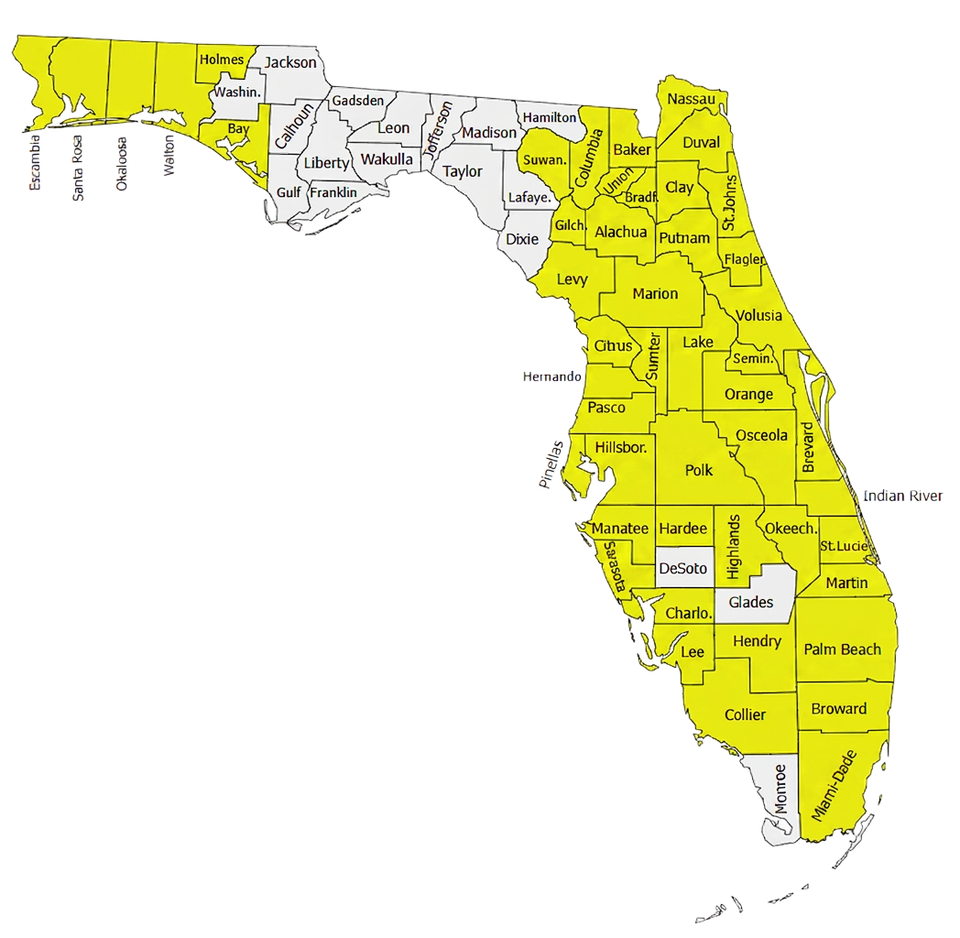
Florida-licensed physical therapists covering 50+ counties in Florida.
Our clinicians reach major metros and rural communities alike — from the Panhandle to the Keys. Patients are typically seen at home or at their workplace within 48 hours of a complete referral.
- Clinicians on our team
- Statewide
- Florida counties covered
- 50+
Need to refer a Florida patient?
Our intake team confirms auto insurance coverage during the call and schedules most patients at home or at their workplace within 48 hours.