
Designing Your Week as a 1099 PT: PRN, Part-Time, or a Full Caseload
One of the real advantages of contractor work is that you design the week — PRN, part-time around a W-2 role, or a full mobile caseload. Here's how each pattern actually looks for in-home PTs and PTAs.
PT Near Me
Florida-licensed in-home physical therapy team
The real point of 1099: the calendar is yours
When clinicians ask what life is like as a 1099 mobile PT, they're usually really asking one of two questions: "Will I make enough?" and "Will I get my life back?" The first one is a function of how many visits you choose to take. The second one is a function of how you design your week.
In a W-2 clinic role, the schedule is handed to you. In a 1099 mobile role, the schedule is a tool you build. Below are the three patterns we see most often, what they look like in practice, and who tends to thrive in each one.
Pattern 1 — PRN: a few visits a week
PRN is the lightest pattern. You open availability for a small number of visits on specific days and let the platform fill them. Most PRN clinicians run 2–6 visits a week total.
PRN fits well when:
- You have a primary W-2 role and want supplemental income with full schedule control.
- You're returning from parental leave or a sabbatical and ramping back in.
- You're caring for a family member and need most days reserved.
- You teach part-time and want to stay clinically active.
- You're testing whether the mobile model is right for you before scaling up.
Pattern 2 — Part-time hybrid: 2–3 days a week
This is the most common entry pattern. You lock in 2–3 fixed days a week — often Tuesday/Thursday or Monday/Wednesday/Friday — and treat 4–5 in-home patients per day in a tight cluster. Total weekly volume lands in the 8–15 visit range.
Why so many clinicians start here:
- It's a meaningful income contribution without being a full identity shift.
- It pairs cleanly with a W-2 role at a hospital, clinic, school district, or academic program.
- It builds momentum: by month two or three, most clinicians know whether they want to scale to full caseload or stay hybrid.
- It's family-friendly. School pickups, daycare windows, partner travel — all workable.
Documentation is part of the schedule design. Most part-time clinicians block 45–60 minutes at the end of each treatment day for notes, so the work doesn't bleed into the weekend.
Pattern 3 — Full mobile caseload
Full caseload is what it sounds like: mobile work is your primary professional life. The schedule typically looks like 4–5 days a week, 4–6 visits a day, in a defined geographic cluster.
A full mobile schedule does not look like a 12-patient clinic day. The pace is different. You're not stacking patients in 30-minute rooms; you're driving a thoughtful route between one-on-one visits. Most full-caseload clinicians intentionally design in:
- A protected lunch window — actually 30–45 minutes, not a Cliff Bar between visits.
- An admin half-day. Many do a half-day of documentation, CEUs, and admin on Friday or Monday.
- Geographic discipline. The further you let your radius drift, the more your day fragments. Tight clusters protect your week.
- A re-eval cadence baked into the calendar, not bolted on at the end of the month.
How to pick the pattern that fits
There's no "right" answer — there's the answer that fits your life right now. Most clinicians move between patterns over time. PRN this year, part-time next year as kids enter school, full caseload after that, back to part-time during a graduate program, and so on. The contract structure doesn't care; the calendar is yours.
| Life situation | Likely fit |
|---|---|
| Have a W-2 role, want supplemental income | PRN or part-time hybrid |
| Returning from leave / sabbatical | PRN, scaling up |
| Primary caregiver, school-age kids | Part-time hybrid |
| Burned out by clinic productivity demands | Part-time hybrid or full caseload |
| Want this to be your career | Full caseload |
| Teach or have an academic role | PRN around teaching |
Guardrails that protect any pattern
Three habits keep any of these patterns sustainable, regardless of volume:
- Documentation is part of the workday. Block the time before you take the visits.
- Geographic radius is a real boundary. Saying yes to a visit 45 minutes away once becomes saying yes every Tuesday. Set the radius, hold the radius.
- Treat self-employment taxes as fixed. Set aside the percentage your CPA tells you on every deposit. Don't borrow from it.
Build the week you actually want
Frequently asked questions
- Can I change patterns later?
- Yes — and most clinicians do. You set your availability week by week. The contract structure stays the same whether you're running PRN or full caseload.
- Is there a minimum number of visits I have to take?
- No. You set your own availability. The platform won't force visits onto your calendar.
- Can I take time off?
- Yes — just close the days you're not available. There's no PTO accrual because there's no payroll; there's also no manager whose permission you need.
- What's the most common pattern for clinicians coming out of an outpatient clinic role?
- Part-time hybrid is the most common starting point — 2 or 3 fixed days a week — followed by a decision around month 3 to scale up to full caseload or settle in at hybrid.
- Does the rate per visit change based on how many visits I take?
- No. Per-visit compensation is set by visit type and role, not by volume. Working more doesn't lower your rate; working less doesn't raise it.
Related articles
How 1099 Per-Visit Pay Works for In-Home Physical Therapists
1099 per-visit pay means you're paid for completed visits as an independent contractor — not for hours, not for productivity dashboards. Here's how it actually works for in-home PTs, including the tax and flexibility tradeoffs to understand before you sign.
PT Near Me · June 22, 2026
What It's Like to Be a Mobile PT with PT Near Me
A realistic day-in-the-life of a Florida mobile physical therapist: 4–6 in-home visits, one-on-one care, post-MVA caseload, no productivity quotas, and the autonomy to actually treat.
PT Near Me · June 20, 2026
How to Become a Mobile PT or PTA in Florida
A step-by-step guide to becoming a mobile, in-home physical therapist or PTA in Florida — licensure with the Florida Board of Physical Therapy, the credentials you'll need to contract, and how to actually start taking visits.
PT Near Me · June 23, 2026
In your city
Conditions we treat across Florida
Each guide below covers the clinical evidence, recovery timelines, and coverage details specific to these conditions.
Don’t see your city? View all Florida service areas.
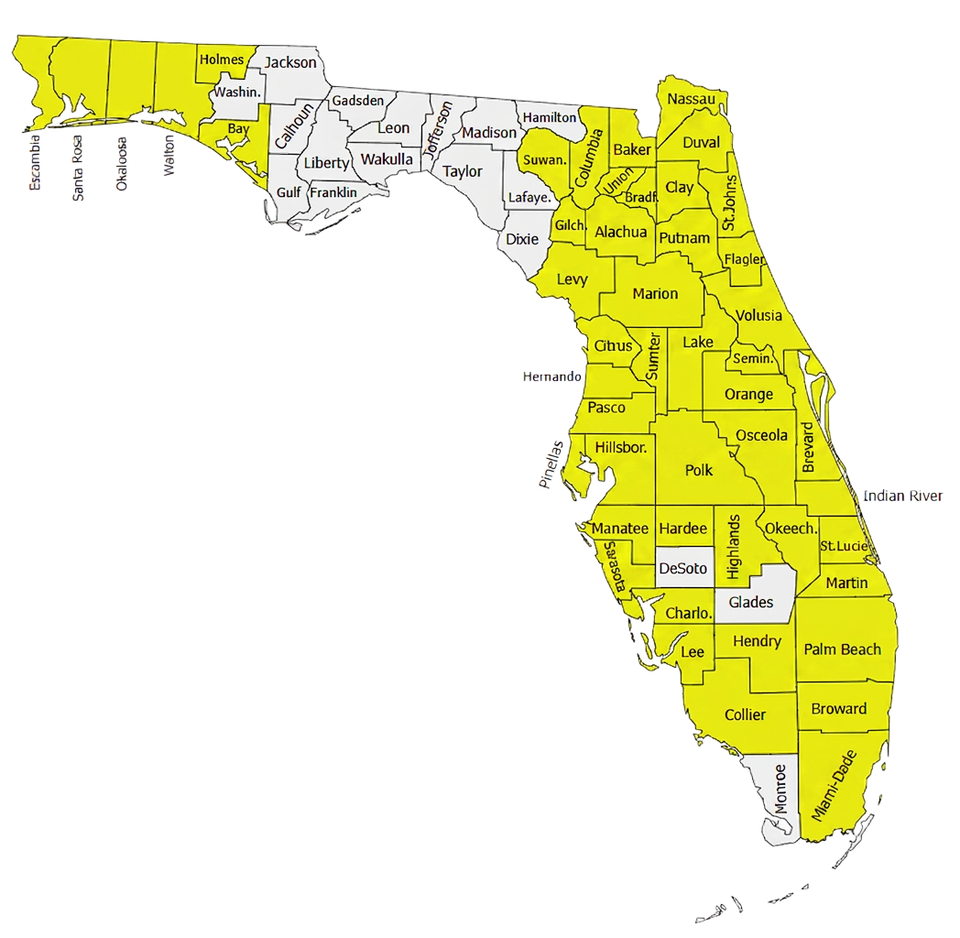
Florida-licensed physical therapists covering 50+ counties in Florida.
Our clinicians reach major metros and rural communities alike — from the Panhandle to the Keys. Patients are typically seen at home or at their workplace within 48 hours of a complete referral.
- Clinicians on our team
- Statewide
- Florida counties covered
- 50+
Need to refer a Florida patient?
Our intake team confirms auto insurance coverage during the call and schedules most patients at home or at their workplace within 48 hours.