
Shoulder Pain After a Car Accident: Seatbelt & Recovery
Seatbelt shoulder pain, rotator-cuff strains, and post-traumatic frozen shoulder are among the most common and most under-treated injuries after a car accident. Here is what is usually injured, which symptoms need urgent care, and what in-home rehabilitation looks like.
PT Near Me
Florida-licensed in-home physical therapy team
What the seatbelt does to the shoulder
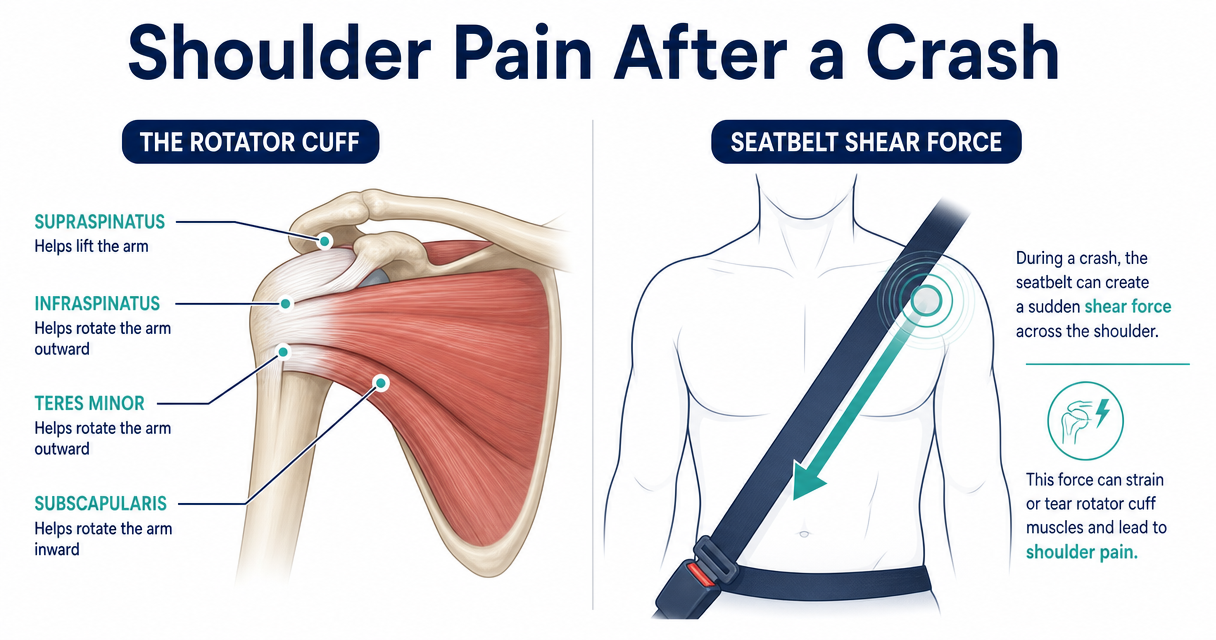
The diagonal portion of a three-point seatbelt crosses one shoulder — the left shoulder for a driver, the right shoulder for a front passenger. At the moment of impact the belt locks, the body lurches forward, and the shoulder absorbs the deceleration of the entire upper torso in a fraction of a second. That single mechanism explains the cluster of injuries we routinely see on that side: rotator-cuff strains, AC-joint sprains, labral tears, and brachial plexus stretch.
The seatbelt is still by far the most important piece of safety equipment in any vehicle — the trade-off of a treatable shoulder injury for a survivable crash is one almost any patient would take again. The job of the rehab team is to make sure that injury actually gets treated.
The four most common after a crash shoulder diagnoses
| Diagnosis | How it happens | Hallmark symptom |
|---|---|---|
| Rotator-cuff strain or partial tear | Sudden eccentric load on the cuff as the arm decelerates | Pain reaching overhead, weakness lifting the arm |
| Labral / SLAP tear | Forced traction on a flexed, abducted arm gripping the wheel | Deep clicking, pain with overhead activities, instability |
| AC joint sprain | Direct seatbelt or door-armrest impact on the top of the shoulder | Point tenderness over the AC joint, pain reaching across the body |
| Adhesive capsulitis (frozen shoulder) | Prolonged guarding and disuse after an initial mild injury | Progressive loss of range of motion over 6–12 weeks post-crash |
Frozen shoulder is the most under-recognized of the four. It rarely shows up in week one and often arrives in week six or eight when a patient who 'thought it would just heal' arrives at the orthopedist with 50% of normal range of motion. Early movement prevents most of these cases.
When imaging matters before PT
Most after a crash shoulder pain is safe to evaluate with a physical exam first, but imaging matters early when any of the following are present: visible deformity, inability to lift the arm at all, numbness or weakness extending into the hand, a high-energy mechanism, or a popping sensation at the moment of injury. In those cases the referring physician typically orders X-ray first to rule out fracture or dislocation, with MRI reserved for suspected cuff or labral pathology.
Why early PT matters — and how it prevents frozen shoulder
The shoulder is the most range-of-motion–dependent joint in the body, and it loses range fast when it is guarded. Two weeks of holding the arm at the side, sleeping on the other side, and avoiding reaching for things is enough to start the capsular tightening that becomes adhesive capsulitis.
Early structured PT addresses three problems at once: it controls pain so the patient stops guarding, it preserves range of motion so the capsule does not tighten, and it begins the cuff strengthening that protects against re-injury. CDC injury data consistently shows that early active rehabilitation is associated with better functional outcomes after orthopedic injury than passive or delayed approaches.
What in-home shoulder rehab actually looks like
- Phase 1 — pain and motion (weeks 0–3): manual therapy, gentle pendulum and passive ROM, scapular setting, posture correction, sleep positioning education.
- Phase 2 — active ROM and stability (weeks 3–6): active assisted to active ROM, rotator-cuff isometrics, scapular stabilization drills with bands.
- Phase 3 — strength (weeks 6–10): progressive cuff and scapular strengthening, closed-chain stability work, return to overhead reaching.
- Phase 4 — return to activity (weeks 10–12+): functional progression to work and recreational demands, residual-deficit documentation if appropriate.
Doing this at home is straightforward — most shoulder rehab equipment is portable (bands, light dumbbells, a stability ball) and the therapist can use a doorway, a wall, a tabletop, or the patient's couch for cuff and scapular drills. The patient never needs to drive a car while their dominant arm is still painful.
Why shoulder pain often shows up later
It is common to walk away from a crash with only a sore strip where the belt sat, then find days later that reaching into a cupboard or fastening a seatbelt is genuinely painful. The stress response after a crash masks pain, swelling builds over 24 to 72 hours, and the cuff muscles begin guarding. Frozen shoulder is the slowest arrival of all, often appearing six to eight weeks later in someone who kept the arm still and waited.
New shoulder pain that starts a week or two after a crash is worth an exam. It is far easier to keep range of motion than to get it back.
Red flags that need medical care first
- You cannot lift the arm at all, or the shoulder looks deformed or out of place
- Numbness, tingling, or weakness running into the forearm or hand
- A cold, pale, or discolored hand, or a pulse you cannot feel at the wrist
- Severe pain at rest or at night that does not ease in any position
- A loud pop at the moment of impact followed by instability
- Chest pain, difficulty breathing, or severe pain over the collarbone or ribs
- Fever with a hot, swollen shoulder
What an in-home visit looks like
A therapist comes to your home with the equipment the visit needs. The first visit is mostly examination: how the crash happened, how much the shoulder moves actively and passively, cuff strength, joint-line and AC-joint tenderness, and a screen of the neck and nerves in the arm. Treatment usually starts the same visit, and you finish with two or three specific things to do between visits.
Being seen at home matters most here because the tasks that hurt are home tasks: sleeping, dressing, reaching a high shelf, pushing up out of a chair. Those get practiced where they actually happen, and you do not have to drive with a painful arm.
Frequently asked questions
- How long after a car accident does seatbelt shoulder pain last?
- Uncomplicated soft-tissue seatbelt shoulder pain usually peaks in days 2–4 and resolves over 4–8 weeks with appropriate care. Pain that persists or worsens past two weeks warrants a clinical evaluation to rule out cuff or labral injury.
- Can a torn rotator cuff heal without surgery?
- Most partial-thickness cuff tears respond well to structured physical therapy. Full-thickness tears, especially in younger patients or in cases of acute trauma, are more often managed surgically — but PT plays a key role both pre- and post-operatively.
- Will starting PT early really prevent frozen shoulder after a crash?
- Early structured movement substantially lowers the risk of post-traumatic adhesive capsulitis. The mechanism is straightforward — capsular tissue tightens when the joint is held still — and the prevention is daily, low-load, pain-tolerant motion guided by a physical therapist.
- When is shoulder pain after a crash an emergency?
- Get same-day care if you cannot lift the arm at all, the shoulder looks deformed, you have numbness or weakness into the hand, the hand is cold or pale, or you have chest pain or difficulty breathing.
- Can I be treated for a shoulder injury at home?
- Usually yes. Most shoulder rehabilitation uses portable equipment and a wall, doorway, or table, so a therapist can deliver the full program in your home once a clinician has ruled out injuries that need imaging or a specialist.
Related articles
- Recovering After a Crash
Whiplash After a Florida Car Accident: What to Expect in Recovery
Most whiplash recovers within 6 to 12 weeks with early, active physical therapy. A smaller share develops persistent symptoms past three months. Here's what whiplash actually is, what the realistic timeline looks like, and how PT should approach it after a crash in Florida.
PT Near Me · June 21, 2026
- Recovering After a Crash
How Soon Should You Start PT After a Car Accident in Florida?
In Florida, the practical answer is within 14 days — both because Florida law requires initial care in that window and because the clinical evidence strongly favors early intervention for soft-tissue and cervical-spine injuries.
PT Near Me · May 2, 2026
- Recovering After a Crash
HB 837: Florida's 2-Year Statute of Limitations, Explained
Florida House Bill 837, signed in March 2023, cut the statute of limitations for most personal-injury lawsuits from four years to two. If you were injured in a Florida car accident on or after March 24, 2023, you now have two years from the date of the crash to file suit — not four. That shorter clock makes timely medical care and documentation more important than it used to be.
PT Near Me · June 22, 2026
In your city
Conditions we treat across Florida
Each guide below covers the clinical evidence, recovery timelines, and coverage details specific to these conditions.
Don’t see your city? View all Florida service areas.
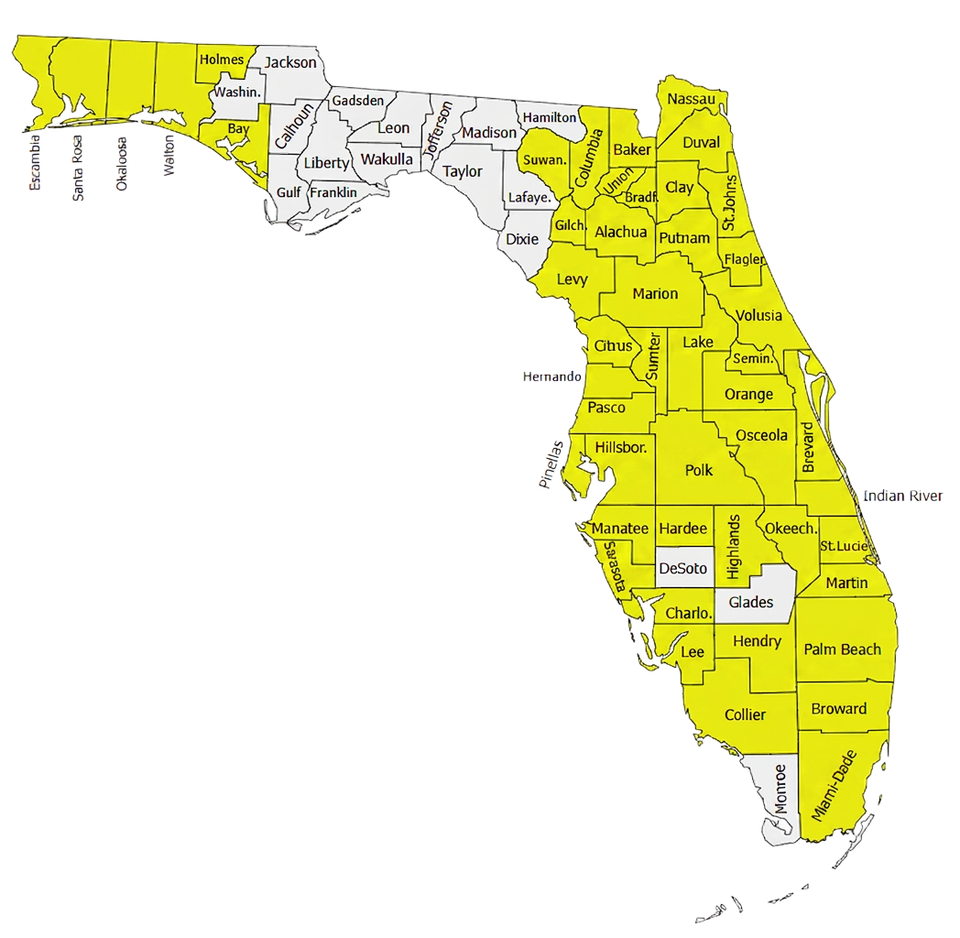
Florida-licensed physical therapists covering 50+ counties in Florida.
Our clinicians reach major metros and rural communities alike — from the Panhandle to the Keys. Patients are typically seen at home or at their workplace within 48 hours of a complete referral.
- Clinicians on our team
- Statewide
- Florida counties covered
- 50+
Need to refer a Florida patient?
Our intake team confirms auto insurance coverage during the call and schedules most patients at home or at their workplace within 48 hours.