
Neck & Back Pain After a Florida Car Accident: PT Guide
Neck and back pain are the most common complaints after a Florida car accident — and the easiest to under-treat. Here is how cervical whiplash and lumbar disc injuries get evaluated, why early active PT works, and how in-home delivery fits Florida auto insurance.
PT Near Me
Florida-licensed in-home physical therapy team
Why neck and back belong in the same plan of care
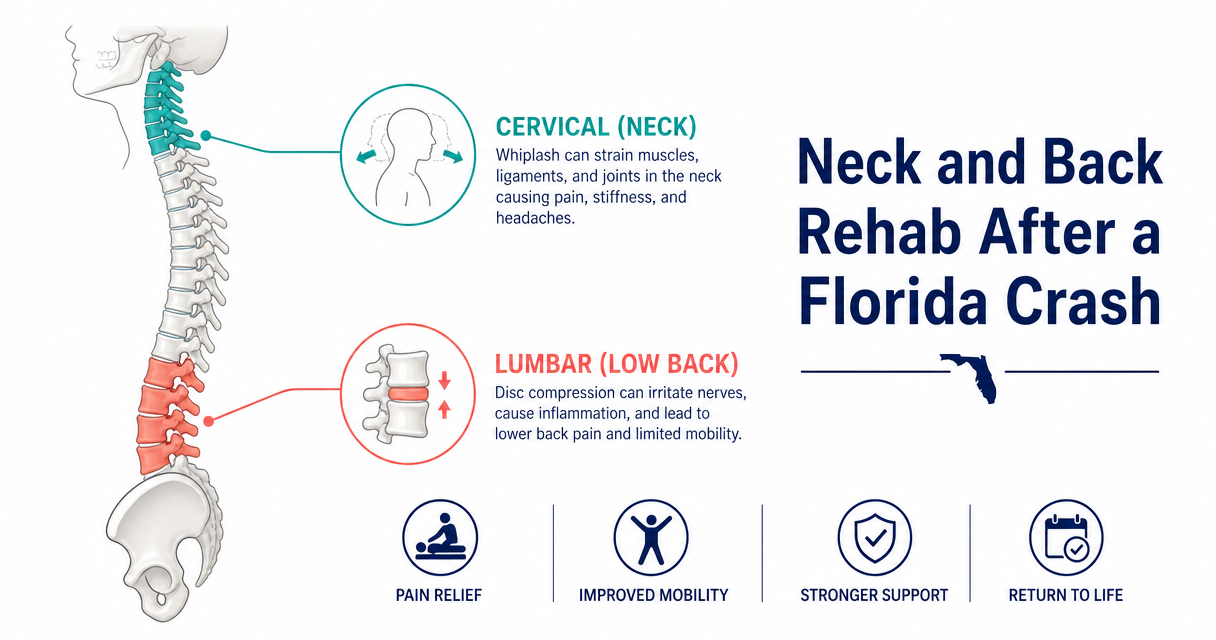
Rear- and side-impact crashes load the cervical and lumbar spine in the same event. The seatbelt anchors the pelvis, the upper torso whips forward and then back, and both ends of the spine — the neck and the low back — absorb that motion. Patients commonly report neck pain in the first 24 hours and develop low-back pain by day three; the reverse pattern is just as common.
Treating only the loudest region misses the point. The physical therapist evaluates and treats both ends of the spine together, because a stiff lumbar segment changes how the cervical spine moves and vice versa.
What actually shows up clinically
| Diagnosis | Region | Typical presentation |
|---|---|---|
| Cervical strain / whiplash (WAD) | Neck | Stiffness, headache, pain with rotation and looking up |
| Cervical facet joint sprain | Neck | Sharp one-sided pain, painful end-range |
| Cervical disc injury | Neck | Arm pain, numbness, weakness — a red flag for prompt physician evaluation |
| Lumbar strain | Low back | Diffuse muscular pain, worse with prolonged sitting |
| Lumbar disc herniation | Low back | Leg pain, numbness, or weakness following a dermatomal pattern |
| SI joint dysfunction | Low back / pelvis | One-sided pain, worse with single-leg loading |
Why active rehab beats rest
Evidence has been clear for two decades that early active rehabilitation outperforms rest and immobilization for both whiplash-associated disorders and acute low-back pain. Soft collars, prolonged bed rest, and passive-only treatment delay recovery and increase the risk of chronic pain. The plan of care for a after a crash spine starts movement early, at a load and range the patient tolerates, and progresses from there.
We cover the cervical side in depth in whiplash after a Florida car accident. The lumbar approach mirrors it — early movement, graded exposure to the painful motion, manual therapy as an adjunct rather than the centerpiece.
What a typical neck + back plan of care covers
- Phase 1 (weeks 0–2): pain control, posture correction, gentle range of motion in both regions, manual therapy, sleep positioning education.
- Phase 2 (weeks 2–6): graded active range of motion, deep neck flexor and lumbar multifidus activation, manual therapy progressions, postural endurance.
- Phase 3 (weeks 6–10): progressive strengthening, return to sitting and driving tolerance, functional retraining for work and household tasks.
- Phase 4 (weeks 10–12+): higher-load return to activity, residual-deficit documentation, discharge home program.
Most patients see meaningful symptom reduction within 3–4 weeks of consistent care. The goal is not to be 'fixed' in 6 weeks; the goal is to be moving correctly so the spine recovers without locking in the avoidance patterns that drive long-term pain.
Why in-home delivery works for spine cases
Sitting in a car for 25 minutes to attend a 45-minute outpatient PT appointment is exactly the activity most aggravating to a post-crash neck or low back. Many patients quit before they finish. In-home PT removes the trip, lets the therapist evaluate the actual sleep surface and workstation, and progresses care without the symptom flare that the commute itself was driving. The completion-rate evidence is in why patients skip PT after accidents.
City-specific care and coverage
For city-specific information on whiplash, low-back pain, and disc rehab, see our condition pages. Sample whiplash pages: Tampa, Orlando, Miami. Low-back pain: Tampa, Orlando, Fort Lauderdale. Herniated disc: Tampa, Miami, St. Petersburg.
Auto insurance covers in-home physical therapy for medically necessary post-crash care when initial care begins within 14 days. PT Near Me bills the patient's auto insurance for crash-related care. We do not bill regular health insurance or Medicare. For a full recovery roadmap, see the Florida car-accident recovery guide.
Frequently asked questions
- Why do I have both neck and back pain after my crash?
- The same crash forces load both ends of the spine. The seatbelt anchors the pelvis while the head and torso accelerate, so the cervical and lumbar regions both absorb energy. Most after a crash patients have symptoms in both regions even when one dominates on day one.
- Is bed rest the right treatment for low-back pain after a crash?
- No. Two decades of evidence show that early active rehabilitation outperforms bed rest for acute low-back pain. The PT plan starts with gentle movement, posture work, and graded activity — not immobilization.
- When should I see a physician about post-crash leg or arm pain?
- Any new numbness, weakness, or pain radiating into the arm or leg warrants prompt physician evaluation, ideally inside the 14-day window. Saddle anesthesia or bowel/bladder changes are emergencies — call 911 or go to the ER.
- Does auto insurance cover combined neck and back rehab?
- Yes — auto insurance covers medically necessary physical therapy regardless of region, including combined cervical and lumbar plans of care. Initial care must begin within 14 days of the crash. PT Near Me bills your auto insurance for crash-related care.
Related articles
- Recovering After a Crash
Whiplash After a Florida Car Accident: What to Expect in Recovery
Most whiplash recovers within 6 to 12 weeks with early, active physical therapy. A smaller share develops persistent symptoms past three months. Here's what whiplash actually is, what the realistic timeline looks like, and how PT should approach it after a crash in Florida.
PT Near Me · June 21, 2026
- Recovering After a Crash
How Soon Should You Start PT After a Car Accident in Florida?
In Florida, the practical answer is within 14 days — both because Florida law requires initial care in that window and because the clinical evidence strongly favors early intervention for soft-tissue and cervical-spine injuries.
PT Near Me · May 2, 2026
- Recovering After a Crash
HB 837: Florida's 2-Year Statute of Limitations, Explained
Florida House Bill 837, signed in March 2023, cut the statute of limitations for most personal-injury lawsuits from four years to two. If you were injured in a Florida car accident on or after March 24, 2023, you now have two years from the date of the crash to file suit — not four. That shorter clock makes timely medical care and documentation more important than it used to be.
PT Near Me · June 22, 2026
In your city
Conditions we treat across Florida
Each guide below covers the clinical evidence, recovery timelines, and coverage details specific to these conditions.
Don’t see your city? View all Florida service areas.
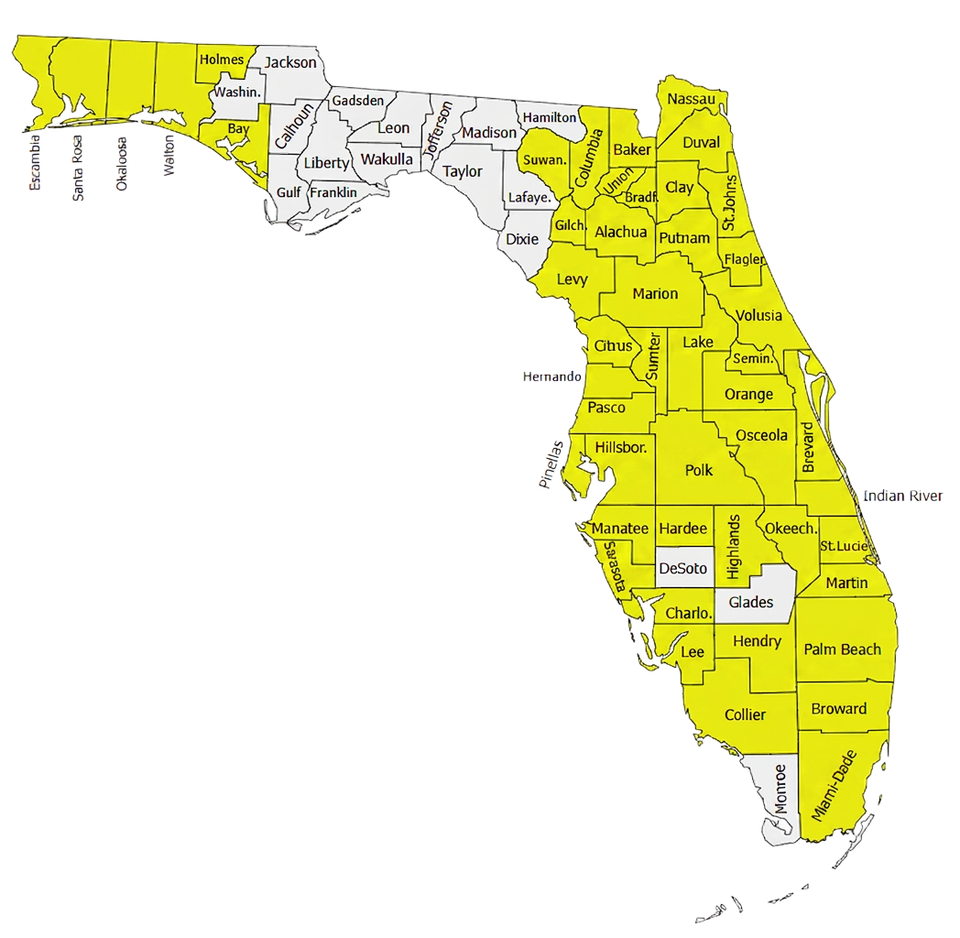
Florida-licensed physical therapists covering 50+ counties in Florida.
Our clinicians reach major metros and rural communities alike — from the Panhandle to the Keys. Patients are typically seen at home or at their workplace within 48 hours of a complete referral.
- Clinicians on our team
- Statewide
- Florida counties covered
- 50+
Need to refer a Florida patient?
Our intake team confirms auto insurance coverage during the call and schedules most patients at home or at their workplace within 48 hours.