
Ankle & Foot Injury After a Car Accident: Recovery Guide
Ankle sprains, midfoot injuries, and foot fractures are some of the most under-treated injuries after a Florida car accident — pedal impact and floorboard intrusion drive most of them. Here is how to recover correctly with in-home physical therapy covered by auto insurance.
PT Near Me
Florida-licensed in-home physical therapy team
How feet and ankles get hurt in a crash
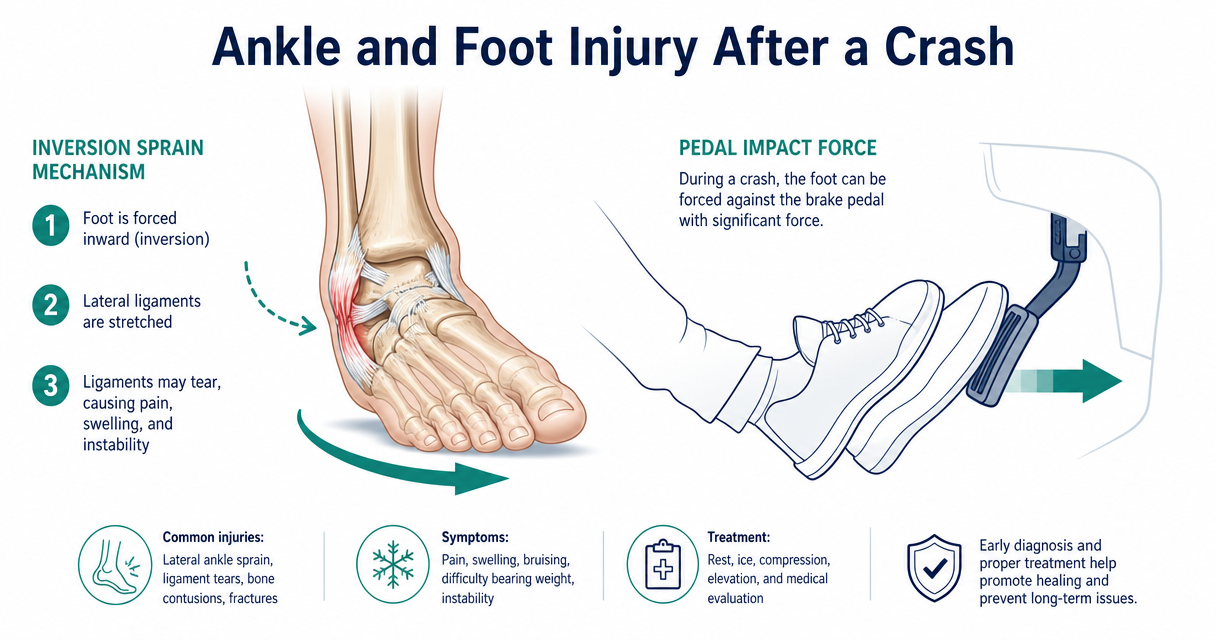
Three mechanisms drive almost every after a crash ankle or foot injury we see. First, the driver's foot is actively pressing the brake pedal when the crash happens, so the ankle is in dorsiflexion under load — exactly the position most vulnerable to ligament damage and to talar dome injury. Second, floorboard intrusion (the metal of the firewall pushing back into the foot well) can crush the midfoot. Third, a planted foot that twists against a fixed pedal can produce a classic inversion or eversion ankle sprain.
The Florida DHSMV publishes annual crash data showing that even moderate-speed collisions produce a substantial volume of lower-extremity injuries. Many are recognized late because back, neck, and shoulder pain dominate the first 24 hours.
What to watch for in the first 72 hours
- Inability to bear any weight on the foot — needs imaging.
- Swelling that wraps the midfoot or the dorsum (top) of the foot rather than just the outside of the ankle — possible Lisfranc injury.
- Bruising on the bottom of the arch — a classic sign of a Lisfranc midfoot injury that is easy to miss.
- Numbness or tingling into the toes.
- Pain over a specific bone rather than diffuse soft tissue pain.
The common diagnoses
| Diagnosis | How it happens | Typical recovery |
|---|---|---|
| Lateral ankle sprain | Foot twists into inversion | 4–8 weeks |
| High (syndesmotic) sprain | Forced external rotation at the ankle | 8–12+ weeks |
| Calcaneal (heel) fracture | Axial load through the floorboard or pedal | 12+ weeks, often surgical |
| Lisfranc midfoot injury | Crush or twist with foot fixed on pedal | 12–16+ weeks, often surgical |
| Plantar fascia / heel pad bruise | Direct impact under the heel | 4–6 weeks |
| Peroneal tendon strain | Lateral ankle inversion | 6–10 weeks |
Why early in-home PT matters
Ankle and foot injuries respond to a careful weight-bearing progression. Too long in a boot or with full off-loading leads to joint stiffness, calf atrophy, and a stubborn gait limp. Too aggressive a return to full weight bearing reinjures healing tissue. The physical therapy plan of care manages that progression visit by visit, calibrated to symptoms, swelling, and imaging.
In-home delivery is particularly useful for foot and ankle cases because driving with a recent ankle injury is unsafe and often medically restricted. Patients who would otherwise miss most of their outpatient PT visits can complete a full plan of care without ever needing to get behind the wheel.
What rehab actually progresses through
- Phase 1 (weeks 0–2): swelling control, gentle pain-free ROM, isometrics, immobilization as ordered by the physician.
- Phase 2 (weeks 2–6): progressive weight bearing, active ROM, calf and intrinsic foot strengthening, balance work, manual therapy.
- Phase 3 (weeks 6–10): full weight bearing, single-leg balance, strength endurance, return to walking distance and household tasks.
- Phase 4 (weeks 10+): return to higher-load activities — stairs without a rail, longer walks, return to work, low-impact recreation.
Every visit also revisits the home environment. We look at the patient's actual rugs, stairs, and shower thresholds because those are the most common reinjury sites. Where useful, we recommend simple home modifications (a stable shower bench, a removed throw rug, a railing) instead of permanent assistive devices that prolong dependence.
Insurance coverage and the 14-day rule
Auto insurance covers medically necessary physical therapy after a car accident, but only when initial care begins within 14 days of the crash. Missing that window can end coverage for the case.
PT Near Me coordinates directly with the patient's referring physician. The patient does not need a separate physician visit for each progress report; we send standardized evaluation, progress, and discharge notes per the workflow in the physician's guide to post-discharge in-home PT.
To verify in-home coverage in your area, see the closest of our Tampa fracture rehab, Orlando fracture rehab, Miami fracture rehab, or Sarasota fracture rehab condition pages, or read the broader Florida car-accident recovery guide.
Frequently asked questions
- Can I walk on a sprained ankle from a car accident?
- Most grade I and II ankle sprains tolerate protected weight bearing within a few days. Grade III sprains and any suspected fracture require imaging and a physician decision before bearing weight. A physical therapist progresses weight bearing based on symptoms, swelling, and imaging.
- What is a Lisfranc injury and why is it dangerous?
- A Lisfranc injury disrupts the midfoot ligaments and joints. It looks like a simple sprain initially but, untreated, leads to long-term arthritis and loss of arch height. If midfoot swelling and arch bruising persist beyond a week after a crash, ask for weight-bearing X-rays or an MRI.
- How many in-home PT visits will a typical after a crash ankle injury need?
- Uncomplicated sprains usually run 12–20 visits over 6–10 weeks at 2–3 visits per week. Surgical cases (Lisfranc, calcaneal fractures, high syndesmotic injuries) commonly run 30+ visits over 3–4 months and are coordinated closely with the operating surgeon.
- Does auto insurance pay for in-home ankle rehab?
- Yes — auto insurance covers medically necessary physical therapy when initial care begins within 14 days of the crash. PT Near Me bills your auto insurance for crash-related care. We do not bill regular health insurance or Medicare.
Related articles
- Recovering After a Crash
How Soon Should You Start PT After a Car Accident in Florida?
In Florida, the practical answer is within 14 days — both because Florida law requires initial care in that window and because the clinical evidence strongly favors early intervention for soft-tissue and cervical-spine injuries.
PT Near Me · May 2, 2026
- Recovering After a Crash
Whiplash After a Florida Car Accident: What to Expect in Recovery
Most whiplash recovers within 6 to 12 weeks with early, active physical therapy. A smaller share develops persistent symptoms past three months. Here's what whiplash actually is, what the realistic timeline looks like, and how PT should approach it after a crash in Florida.
PT Near Me · June 21, 2026
- Recovering After a Crash
HB 837: Florida's 2-Year Statute of Limitations, Explained
Florida House Bill 837, signed in March 2023, cut the statute of limitations for most personal-injury lawsuits from four years to two. If you were injured in a Florida car accident on or after March 24, 2023, you now have two years from the date of the crash to file suit — not four. That shorter clock makes timely medical care and documentation more important than it used to be.
PT Near Me · June 22, 2026
In your city
Conditions we treat across Florida
Each guide below covers the clinical evidence, recovery timelines, and coverage details specific to these conditions.
Don’t see your city? View all Florida service areas.
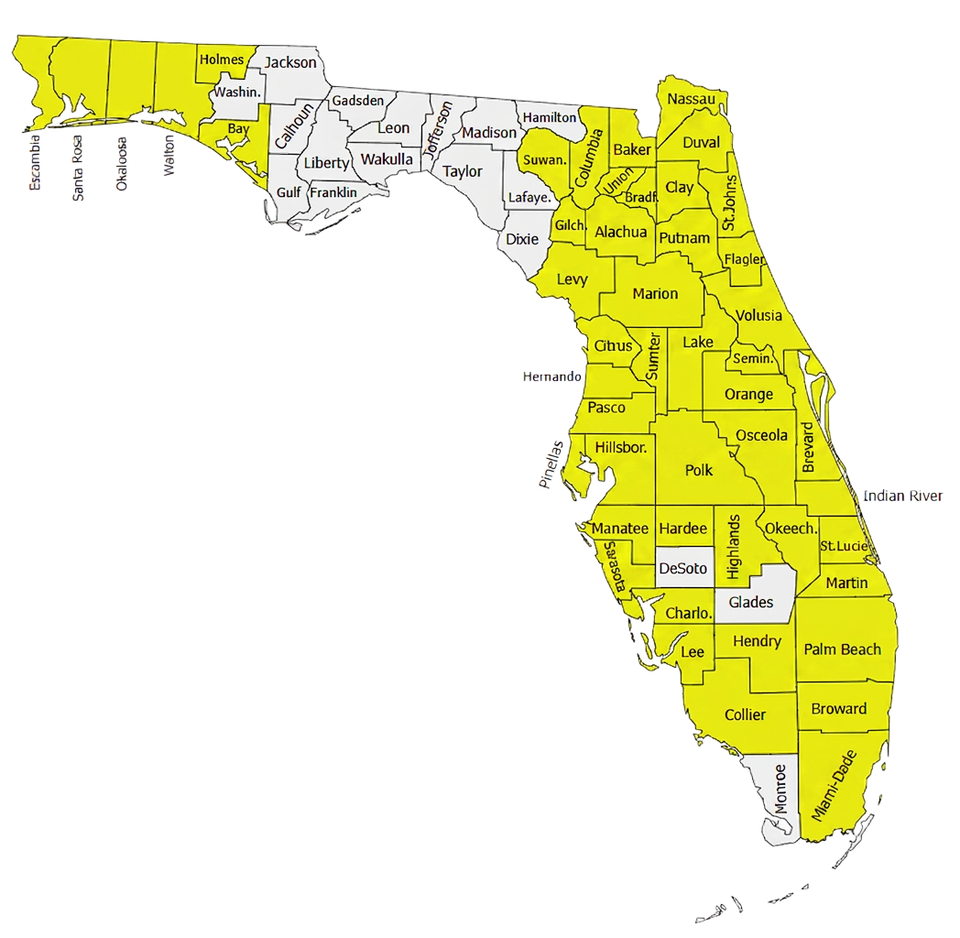
Florida-licensed physical therapists covering 50+ counties in Florida.
Our clinicians reach major metros and rural communities alike — from the Panhandle to the Keys. Patients are typically seen at home or at their workplace within 48 hours of a complete referral.
- Clinicians on our team
- Statewide
- Florida counties covered
- 50+
Need to refer a Florida patient?
Our intake team confirms auto insurance coverage during the call and schedules most patients at home or at their workplace within 48 hours.