Statewide clinical guide
Shoulder Strain & Rotator Cuff Injury — In-Home Physical Therapy in Florida
The shoulder is the most mobile joint in the body, and that mobility comes at the cost of stability. Shoulder pain is the third most common musculoskeletal complaint in primary care, with a 12-month prevalence of about 30% in adults[1]. In a motor vehicle collision the seatbelt restrains the torso while the shoulder girdle and arm continue forward — loading the rotator cuff, the long head of the biceps tendon, the AC joint, and the labrum in a way that's almost guaranteed to produce some degree of soft-tissue injury. The most common diagnoses are rotator cuff tendinopathy, subacromial bursitis, AC joint sprain, and partial-thickness cuff tears[2].
Shoulder pain that isn't treated tends to become a self-reinforcing loop: pain limits motion, immobility produces adhesive capsulitis (frozen shoulder), and a 6-week problem becomes a 6-month problem. The MOON cohort and the Finnish ASIR trial both showed that supervised exercise produces outcomes equivalent to subacromial decompression surgery for atraumatic cuff pain at 2 years[3][4]. The APTA / JOSPT shoulder pain CPG specifically recommends supervised progressive resistance training as first-line treatment[5], and a 2016 BMJ network meta-analysis ranked exercise therapy as the highest-evidence intervention for rotator cuff disease[6].
Common symptoms & presentation
- ·Pain on the outside of the shoulder, often referred down into the deltoid
- ·Weakness with overhead reaching, lifting, or reaching behind the back
- ·Painful arc of motion between roughly 60° and 120° of abduction
- ·Night pain — especially lying on the affected side
- ·Clicking, catching, or a sense of instability
By the numbers
- ~30%adult 12-month prevalence of shoulder painSource [1]
- 75%of atraumatic cuff tears avoid surgery with structured PT (MOON)Source [3]
- ≥12 wksminimum supervised exercise trial recommended before surgical decisionSource [5]
- #1ranked intervention for rotator cuff disease (BMJ network meta-analysis)Source [6]
How in-home PT treats shoulder injuries
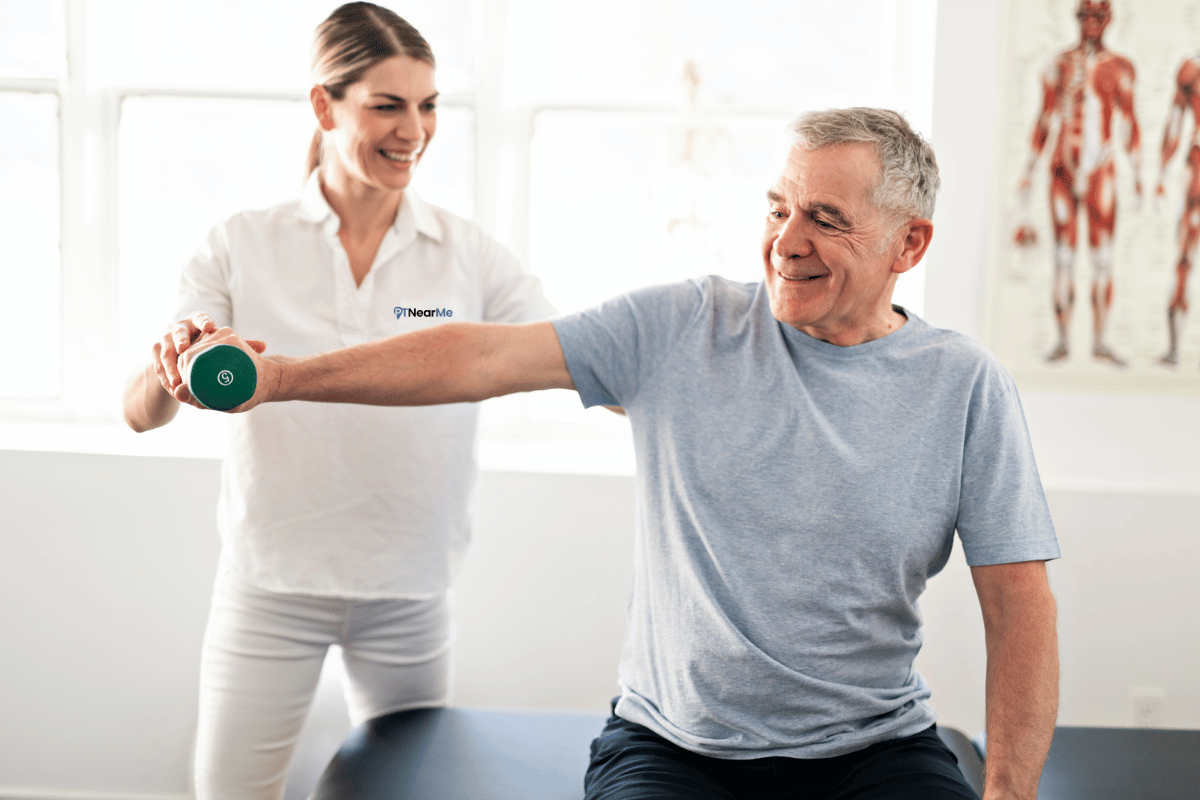
The in-home shoulder evaluation includes goniometric range of motion (AROM and PROM in all planes), manual muscle testing of the rotator cuff and scapular stabilizers, special tests for the cuff (empty can, drop arm, Hawkins-Kennedy), AC joint (cross-body adduction), and labrum (O'Brien's, anterior apprehension)[5]. The DPT documents which functional tasks are limited — overhead reach, behind-the-back reach, lifting a gallon of milk — and uses those as the outcome measures the chart will track.
Treatment progresses from pain modulation and gentle joint mobilization in the first 1–2 weeks, to isolated rotator cuff and scapular stabilizer strengthening (typically with bands and small weights brought to the home), to integrated functional loading patterns by week 4–6[6]. For post-surgical patients, the DPT works directly off the operating surgeon's protocol — most Florida orthopedic surgeons publish protocols our clinicians already use.
Typical recovery timeline
Conservative rotator cuff care typically resolves in 8 to 12 visits over 6 to 10 weeks. Post-surgical repairs follow a 12-week protocol with PT 2–3 times per week, totaling 24 to 36 visits. The MOON cohort found roughly 75% of patients with atraumatic cuff tears avoided surgery at 2 years following a supervised exercise program[3].
When to escalate
These signs are not routine and warrant immediate physician contact or an ER visit.
- ·Inability to actively lift the arm at all (suggests full-thickness rotator cuff tear)
- ·Visible deformity or step-off at the shoulder
- ·Severe night pain unresponsive to position changes
- ·Numbness, tingling, or color change in the hand
Insurance coverage
Florida law requires the initial medical visit within 14 days of the crash. Once that window is met, PT Near Me bills the patient’s auto insurance for medically necessary in-home rehab. We do not bill regular health insurance or Medicare.
Shoulder Injuries PT in your Florida city
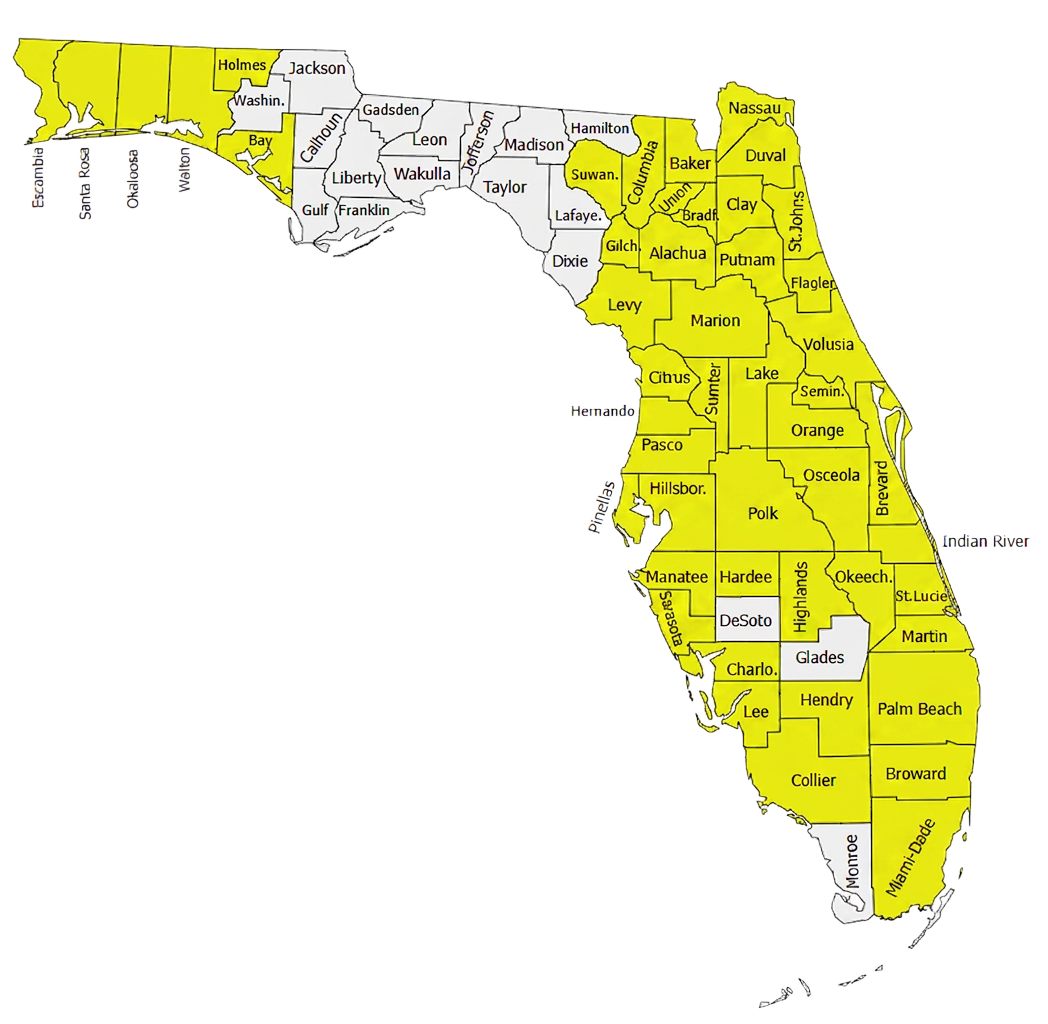
We treat shoulder injuries across 50+ Florida counties. Pick a city to see local hospitals, crash corridors, and coverage notes for that market.
- Tampa, FLHillsborough County
- Wesley Chapel, FLPasco County
- Brandon, FLHillsborough County
- Clearwater, FLPinellas County
- St. Petersburg, FLPinellas County
- Lakeland, FLPolk County
- Orlando, FLOrange County
- Kissimmee, FLOsceola County
- Ocala, FLMarion County
- Spring Hill, FLHernando County
- Sarasota, FLSarasota County
- Bradenton, FLManatee County
- Riverview, FLHillsborough County
- Land O' Lakes, FLPasco County
- Palm Harbor, FLPinellas County
- New Port Richey, FLPasco County
- Trinity, FLPasco County
- Brooksville, FLHernando County
- Homosassa, FLCitrus County
- Hudson, FLPasco County
- Oldsmar, FLPinellas County
- Largo, FLPinellas County
- Plant City, FLHillsborough County
- Sun City Center, FLHillsborough County
- Parrish, FLManatee County
- Port Charlotte, FLCharlotte County
- Auburndale, FLPolk County
- The Villages, FLSumter County
- Wildwood, FLSumter County
- Leesburg, FLLake County
- Eustis, FLLake County
- Tavares, FLLake County
- Mount Dora, FLLake County
- Clermont, FLLake County
- Winter Garden, FLOrange County
- Apopka, FLOrange County
- Melbourne, FLBrevard County
- Daytona Beach, FLVolusia County
- Gainesville, FLAlachua County
- West Palm Beach, FLPalm Beach County
- Jupiter, FLPalm Beach County
- Fort Lauderdale, FLBroward County
- Pembroke Pines, FLBroward County
- Miami, FLMiami-Dade County
- Naples, FLCollier County
- Tallahassee, FLLeon County
- Pensacola, FLEscambia County
- Jacksonville, FLDuval County
- Fort Myers, FLLee County
- Cape Coral, FLLee County
Shoulder Injuries FAQ
- Do I need an MRI for shoulder pain?
- Not as a first step for most patients. A skilled physical exam can identify the majority of significant cuff and labral pathology, and 4–6 weeks of conservative PT is the standard pre-imaging trial unless red flags are present.
- Can in-home PT treat post-surgical rotator cuff?
- Yes — we follow the operating surgeon's protocol exactly. Many post-op patients prefer in-home PT for the first 4–6 weeks because driving with an arm sling is unsafe.
- Will cortisone injections help my shoulder?
- Cortisone can provide short-term pain relief, but the evidence on long-term function is mixed. Most orthopedic guidelines recommend PT first, with injection reserved for patients who plateau.
References & clinical evidence
All statistics on this page are sourced from peer-reviewed journals, clinical practice guidelines, or U.S. government health agencies.
- [1]Prevalence of shoulder pain in the general population — systematic review— Best Pract Res Clin Rheumatol, 2004
- [2]Rotator Cuff Tears — clinical overview— NIH / StatPearls, 2023
- [3]MOON Shoulder Group — nonoperative management of atraumatic rotator cuff tears— J Shoulder Elbow Surg, 2013
- [4]Finnish Subacromial Impingement Arthroscopy (FIMPACT) trial— BMJ, 2018
- [5]Shoulder Pain and Mobility Deficits: Adhesive Capsulitis — CPG— JOSPT / APTA, 2013
- [6]Comparative effectiveness of interventions for rotator cuff disease — network meta-analysis— BMJ, 2015
Related reading
How Soon Should You Start PT After a Car Accident in Florida?
In Florida, the practical answer is within 14 days — both because Florida law requires initial care in that window and because the clinical evidence strongly favors early intervention for soft-tissue and cervical-spine injuries.
What to Expect at Your First In-Home Physical Therapy Visit
A minute-by-minute breakdown of what happens at your first in-home physical therapy visit in Florida — what the therapist brings, how the evaluation works, and what you should have ready.
Mobile Physical Therapy: The In-Home PT Guide for Florida Patients
How mobile, in-home physical therapy actually works in Florida — from referral and first visit to discharge — and when it's the right level of care.
Get a shoulder injuries patient seen at home — usually within 48 hours.
Florida-licensed physical therapists covering 50+ counties in Florida.
Our clinicians reach major metros and rural communities alike — from the Panhandle to the Keys. Patients are typically seen at home or at their workplace within 48 hours of a complete referral.
- Clinicians on our team
- Statewide
- Florida counties covered
- 50+