Statewide clinical guide
Concussion & Vestibular Rehab — In-Home Physical Therapy in Florida
Concussion — clinically a mild traumatic brain injury (mTBI) — is dramatically underdiagnosed after motor vehicle collisions. CDC surveillance counted approximately 2.5 million emergency department visits for traumatic brain injury in a recent year, with motor vehicle crashes the second-leading mechanism[1]. The patient doesn't have to lose consciousness, and most don't; the diagnostic criteria are any alteration in mental status (feeling dazed, brief confusion, post-traumatic amnesia) at the time of impact[2]. By the time the patient is discharged from the ER, the adrenaline has worn off and the headache, light sensitivity, brain fog, and dizziness that show up over the next 24–72 hours are often dismissed as stress. They are not.
The Amsterdam 2022 Consensus Statement on Concussion in Sport[3] and the CDC HEADS UP clinical guidance[2] have both shifted away from prolonged rest. Current best practice is light cognitive and physical activity within 24–48 hours, sub-symptom-threshold aerobic exercise prescribed using the Buffalo Concussion Treadmill Test[4], and early vestibular-oculomotor rehab when symptoms warrant. A 2014 randomized trial demonstrated that cervical and vestibular physiotherapy meaningfully accelerated medical clearance compared with standard care[5]. The cervical spine is almost always involved in a crash-mechanism concussion, which is why a physical therapist with vestibular training is the right clinician — not just a neurologist or primary care doctor.
Common symptoms & presentation
- ·Headache (most common — often pressure-type, worse with screens or reading)
- ·Dizziness, vertigo, or motion sensitivity in busy environments
- ·Difficulty concentrating, slowed thinking, or brain fog
- ·Light or noise sensitivity
- ·Sleep disturbance — both insomnia and hypersomnia
- ·Emotional lability, irritability, or low mood
- ·Balance problems, especially in low light or on uneven surfaces
By the numbers
- 2.5Mannual U.S. TBI-related ED visits (CDC)Source [1]
- 24–48hcurrent rest recommendation before resuming light activitySource [3]
- 15–30%develop persistent symptoms beyond 3 months without active rehabSource [7]
- ~50%faster medical clearance with vestibular + cervical PT (RCT)Source [5]
How in-home PT treats concussion & post-concussion symptoms
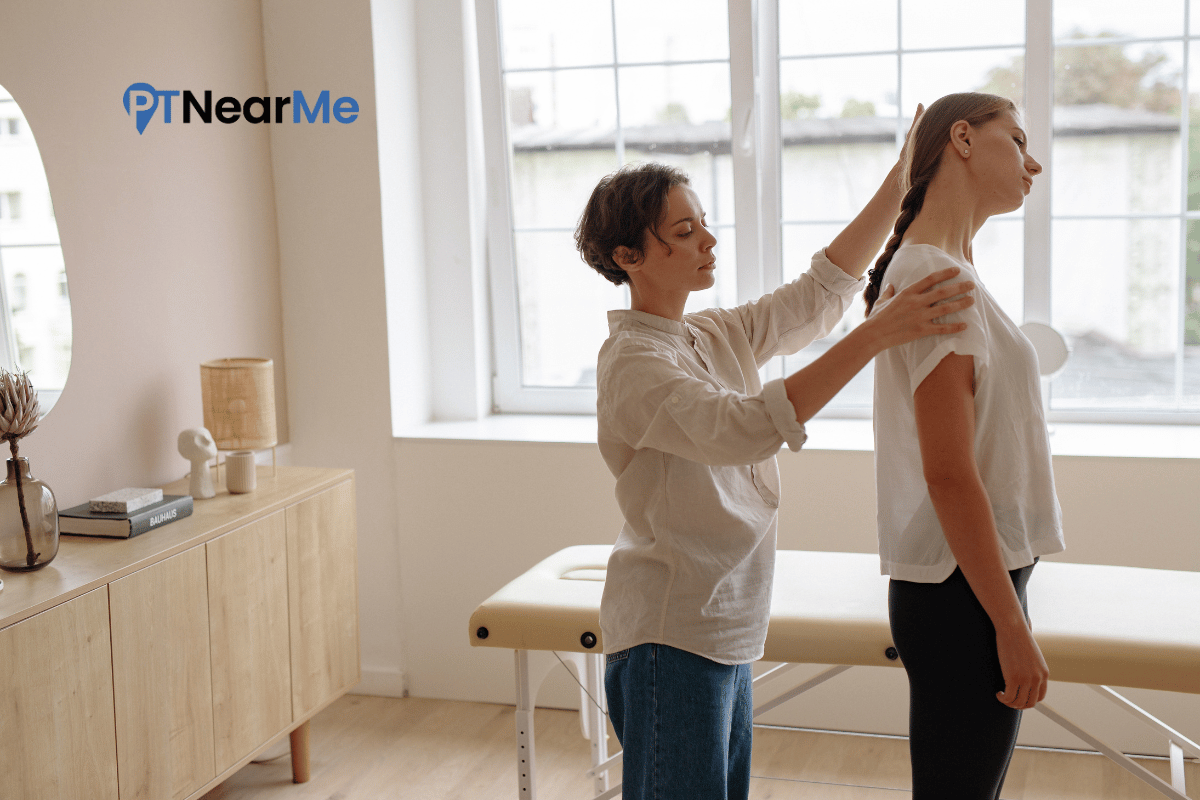
In-home concussion evaluation uses the Vestibular/Ocular-Motor Screening (VOMS)[6], a Buffalo Treadmill or Bike Test adapted to the home setting[4], a cervical exam (cervicogenic dizziness mimics central vestibular dysfunction), and a balance battery (BESS or modified CTSIB). The DPT sets a sub-symptom-threshold heart rate target and prescribes graded aerobic activity the patient can do safely at home.
Subsequent visits add gaze stabilization (VOR x1/x2), smooth pursuit and saccade training, habituation exercises for motion sensitivity, and progressive dynamic balance work[5]. The cervical component — sub-occipital release, upper cervical mobilization, deep neck flexor activation — is woven in throughout. Patients who follow the protocol typically see symptom reduction within 2–3 weeks; without it, post-concussive symptoms can persist for months — roughly 15–30% of mTBI patients develop persistent symptoms beyond 3 months[7].
Typical recovery timeline
Most post-crash concussions resolve in 8 to 12 visits over 4 to 8 weeks when treatment starts within the first 2 weeks of injury. Delayed presentations (>4 weeks post-injury) often need 12 to 20 visits. Median sport-related concussion recovery in adults is roughly 10–14 days[3], but after a crash cases tend to run longer.
When to escalate
These signs are not routine and warrant immediate physician contact or an ER visit.
- ·Worsening headache, repeated vomiting, or new focal neurologic signs
- ·Seizure activity
- ·Increasing confusion or change in level of arousal
- ·Pupillary asymmetry or new vision loss
Insurance coverage
Florida law requires the initial medical visit within 14 days of the crash. Once that window is met, PT Near Me bills the patient’s auto insurance for medically necessary in-home rehab. We do not bill regular health insurance or Medicare.
Concussion & Post-Concussion Symptoms PT in your Florida city
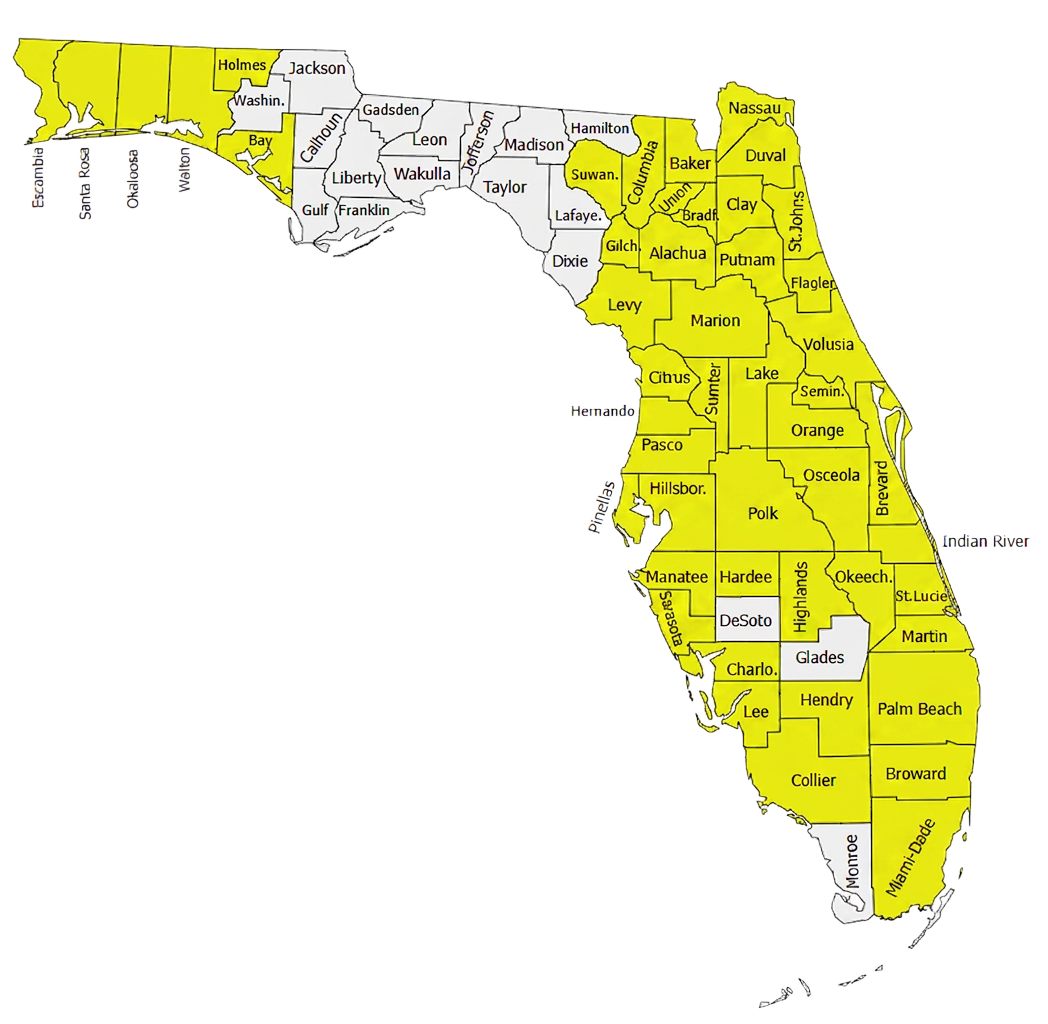
We treat concussion & post-concussion symptoms across 50+ Florida counties. Pick a city to see local hospitals, crash corridors, and coverage notes for that market.
- Tampa, FLHillsborough County
- Wesley Chapel, FLPasco County
- Brandon, FLHillsborough County
- Clearwater, FLPinellas County
- St. Petersburg, FLPinellas County
- Lakeland, FLPolk County
- Orlando, FLOrange County
- Kissimmee, FLOsceola County
- Ocala, FLMarion County
- Spring Hill, FLHernando County
- Sarasota, FLSarasota County
- Bradenton, FLManatee County
- Riverview, FLHillsborough County
- Land O' Lakes, FLPasco County
- Palm Harbor, FLPinellas County
- New Port Richey, FLPasco County
- Trinity, FLPasco County
- Brooksville, FLHernando County
- Homosassa, FLCitrus County
- Hudson, FLPasco County
- Oldsmar, FLPinellas County
- Largo, FLPinellas County
- Plant City, FLHillsborough County
- Sun City Center, FLHillsborough County
- Parrish, FLManatee County
- Port Charlotte, FLCharlotte County
- Auburndale, FLPolk County
- The Villages, FLSumter County
- Wildwood, FLSumter County
- Leesburg, FLLake County
- Eustis, FLLake County
- Tavares, FLLake County
- Mount Dora, FLLake County
- Clermont, FLLake County
- Winter Garden, FLOrange County
- Apopka, FLOrange County
- Melbourne, FLBrevard County
- Daytona Beach, FLVolusia County
- Gainesville, FLAlachua County
- West Palm Beach, FLPalm Beach County
- Jupiter, FLPalm Beach County
- Fort Lauderdale, FLBroward County
- Pembroke Pines, FLBroward County
- Miami, FLMiami-Dade County
- Naples, FLCollier County
- Tallahassee, FLLeon County
- Pensacola, FLEscambia County
- Jacksonville, FLDuval County
- Fort Myers, FLLee County
- Cape Coral, FLLee County
Concussion & Post-Concussion Symptoms FAQ
- Isn't rest the best treatment for a concussion?
- Only for the first 24–48 hours. The current consensus statements (Amsterdam 2022, CDC) recommend introducing sub-symptom-threshold aerobic activity within 48 hours and active vestibular/cervical rehab within 1–2 weeks. Prolonged rest is associated with worse outcomes.
- Why does the PT also work on my neck?
- The same force that concussed your brain almost always sprained your upper cervical spine. Cervicogenic dizziness and cervicogenic headache mimic — and often coexist with — central vestibular dysfunction. Treating only one half of the problem leaves you symptomatic.
- Will screens make my concussion worse?
- Total screen avoidance isn't necessary or helpful after the first few days. We typically prescribe graded screen exposure with built-in visual breaks (the 20-20-20 rule) and adjust based on symptom response.
References & clinical evidence
All statistics on this page are sourced from peer-reviewed journals, clinical practice guidelines, or U.S. government health agencies.
- [1]Traumatic Brain Injury & Concussion — surveillance data— CDC
- [2]HEADS UP — Clinical guidance on mild TBI— CDC
- [3]Amsterdam 2022 Consensus Statement on Concussion in Sport— British Journal of Sports Medicine, 2023
- [4]Buffalo Concussion Treadmill Test — exercise tolerance after concussion— Clin J Sport Med, 2010
- [5]Cervicovestibular rehabilitation in sport-related concussion: a randomised controlled trial— BJSM, 2014
- [6]Vestibular/Ocular-Motor Screening (VOMS) for concussion— American Journal of Sports Medicine, 2014
- [7]Persistent post-concussive symptoms — clinical overview— NIH / StatPearls, 2023
Related reading
Whiplash After a Florida Car Accident: What to Expect in Recovery
Most whiplash recovers within 6 to 12 weeks with early, active physical therapy. A smaller share develops persistent symptoms past three months. Here's what whiplash actually is, what the realistic timeline looks like, and how PT should approach it after a crash in Florida.
How Soon Should You Start PT After a Car Accident in Florida?
In Florida, the practical answer is within 14 days — both because Florida law requires initial care in that window and because the clinical evidence strongly favors early intervention for soft-tissue and cervical-spine injuries.
What to Expect at Your First In-Home Physical Therapy Visit
A minute-by-minute breakdown of what happens at your first in-home physical therapy visit in Florida — what the therapist brings, how the evaluation works, and what you should have ready.
Get a concussion & post-concussion symptoms patient seen at home — usually within 48 hours.
Florida-licensed physical therapists covering 50+ counties in Florida.
Our clinicians reach major metros and rural communities alike — from the Panhandle to the Keys. Patients are typically seen at home or at their workplace within 48 hours of a complete referral.
- Clinicians on our team
- Statewide
- Florida counties covered
- 50+