Statewide clinical guide
Low Back Pain & Lumbar Strain — In-Home Physical Therapy in Florida
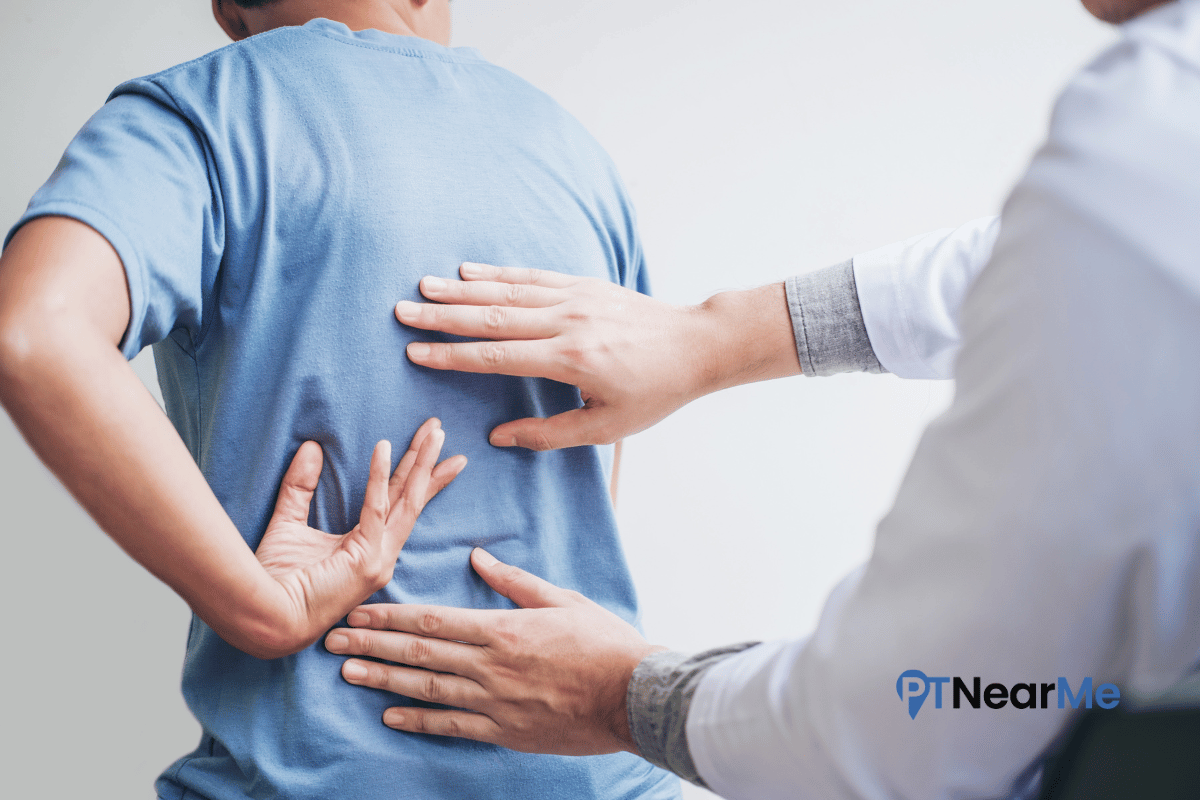
Low back pain is the leading cause of years lived with disability worldwide[1] and the second most common reason our clinicians are called out after a Florida MVA. NIH data place lifetime prevalence in U.S. adults at roughly 80%, with about 25% of adults reporting low back pain in any given 3-month period[2]. Post-crash low back pain has a distinct pattern: a combination of lumbar paraspinal muscle strain, facet joint irritation, and pelvic ring asymmetry caused by the seatbelt loading the torso asymmetrically during impact — and pain that's worse with prolonged sitting (which is exactly what every PI patient does while waiting on doctor follow-ups and adjuster visits).
The clinical priority is to rule out the small percentage of cases that need imaging or surgical consult — cauda equina, fracture, infection — and then to get the patient moving early. The 2017 American College of Physicians guideline explicitly recommends non-pharmacologic treatment, including exercise, spinal manipulation, and heat, as first-line for acute and subacute low back pain[3]. A 2017 JAMA systematic review found spinal manipulative therapy produced modest short-term improvements in pain and function comparable to other recommended therapies[4]. The Treatment-Based Classification approach — matching patients to manipulation, stabilization, specific exercise, or traction — has the strongest functional outcomes data in the PT literature[5].
Common symptoms & presentation
- ·Aching or sharp pain across the lumbar paraspinals, often worse on one side
- ·Stiffness after sitting more than 20–30 minutes or first thing in the morning
- ·Pain with bending forward, twisting, or transitioning sit-to-stand
- ·Radiating pain, tingling, or numbness into the buttock or down the leg (sciatica — flag the DPT)
- ·Muscle spasm or visible guarding on one side of the spine
By the numbers
- #1global cause of years lived with disabilitySource [1]
- ~80%U.S. adult lifetime prevalenceSource [2]
- 25%of adults in any 3-month windowSource [2]
- 0imaging studies recommended in first 6 weeks without red flagsSource [7]
How in-home PT treats back pain
The in-home evaluation includes a neurologic screen (myotomes L2–S1, reflexes, straight-leg raise, slump test), lumbar range of motion in all planes, palpation of the lumbar paraspinals and gluteal muscles, and a functional assessment of sit-to-stand, gait, and a basic squat. We use the Treatment-Based Classification system[5] to sort patients into one of four buckets, each with its own evidence base. The APTA / JOSPT low back pain CPG aligns interventions with stage of care: thrust manipulation and exercise for acute, motor-control and aerobic exercise for subacute, and progressive resistance plus pain education for chronic[6].
Most acute and subacute post-crash patients land in the manipulation or stabilization category. Manual therapy is delivered on the patient's own bed or a portable mat; lumbar stabilization work uses bodyweight (dead bugs, bird dogs, side planks) and a single resistance band. Routine imaging is explicitly discouraged in the first 6 weeks without red flags[7]. The DPT also addresses the workstation, the driver's seat, and the patient's sleep position — the three places where back pain is reinforced between visits.
Typical recovery timeline
Uncomplicated mechanical low back pain typically resolves in 6 to 12 visits over 4 to 8 weeks. About 33% of acute low back pain becomes recurrent within one year[1], which is why a discharge home-exercise program is built into every plan of care.
When to escalate
These signs are not routine and warrant immediate physician contact or an ER visit.
- ·Saddle anesthesia, loss of bowel or bladder control (cauda equina — emergency)
- ·Progressive lower-extremity weakness or foot drop
- ·Unexplained weight loss, fever, or night pain (rule out infection or malignancy)
- ·History of trauma plus pain on percussion of the spine (rule out fracture)
Insurance coverage
Florida law requires the initial medical visit within 14 days of the crash. Once that window is met, PT Near Me bills the patient’s auto insurance for medically necessary in-home rehab. We do not bill regular health insurance or Medicare.
Back Pain PT in your Florida city
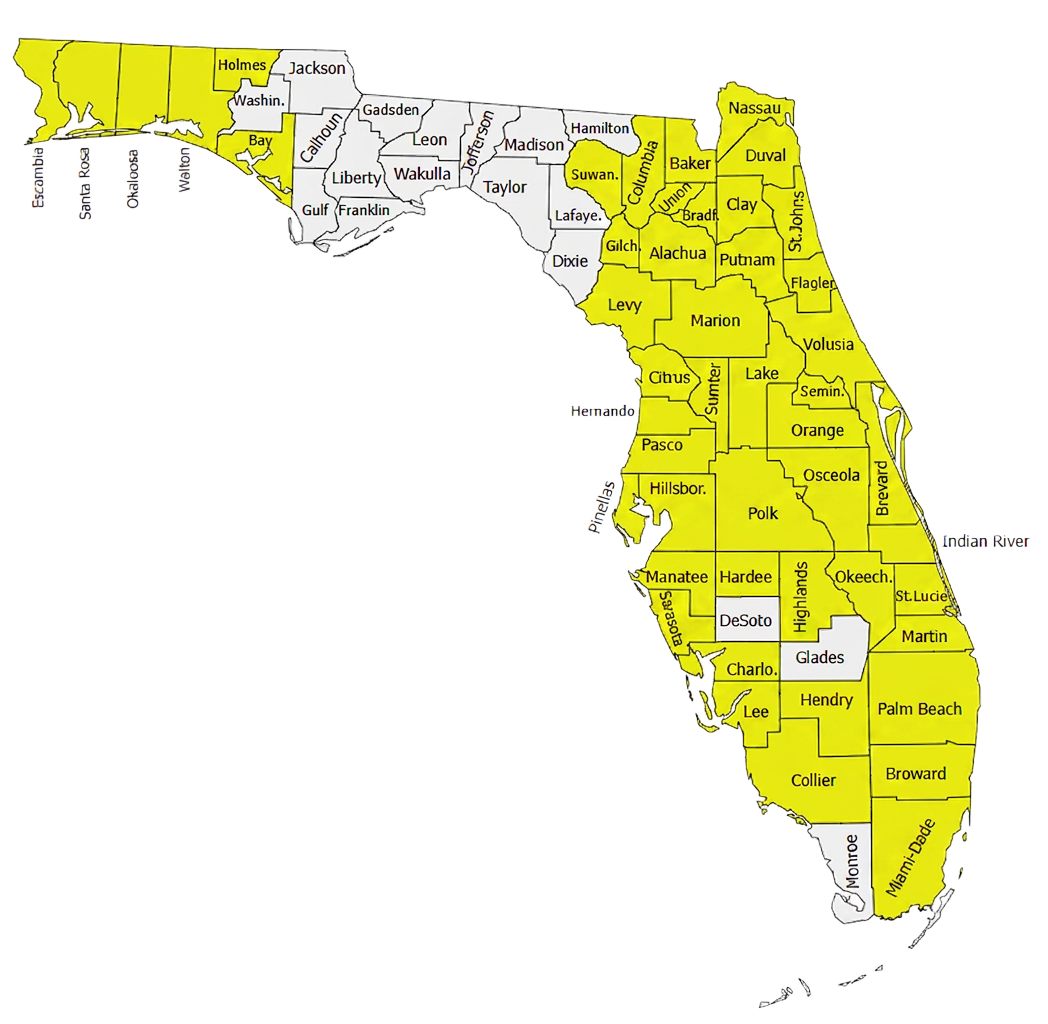
We treat back pain across 50+ Florida counties. Pick a city to see local hospitals, crash corridors, and coverage notes for that market.
- Tampa, FLHillsborough County
- Wesley Chapel, FLPasco County
- Brandon, FLHillsborough County
- Clearwater, FLPinellas County
- St. Petersburg, FLPinellas County
- Lakeland, FLPolk County
- Orlando, FLOrange County
- Kissimmee, FLOsceola County
- Ocala, FLMarion County
- Spring Hill, FLHernando County
- Sarasota, FLSarasota County
- Bradenton, FLManatee County
- Riverview, FLHillsborough County
- Land O' Lakes, FLPasco County
- Palm Harbor, FLPinellas County
- New Port Richey, FLPasco County
- Trinity, FLPasco County
- Brooksville, FLHernando County
- Homosassa, FLCitrus County
- Hudson, FLPasco County
- Oldsmar, FLPinellas County
- Largo, FLPinellas County
- Plant City, FLHillsborough County
- Sun City Center, FLHillsborough County
- Parrish, FLManatee County
- Port Charlotte, FLCharlotte County
- Auburndale, FLPolk County
- The Villages, FLSumter County
- Wildwood, FLSumter County
- Leesburg, FLLake County
- Eustis, FLLake County
- Tavares, FLLake County
- Mount Dora, FLLake County
- Clermont, FLLake County
- Winter Garden, FLOrange County
- Apopka, FLOrange County
- Melbourne, FLBrevard County
- Daytona Beach, FLVolusia County
- Gainesville, FLAlachua County
- West Palm Beach, FLPalm Beach County
- Jupiter, FLPalm Beach County
- Fort Lauderdale, FLBroward County
- Pembroke Pines, FLBroward County
- Miami, FLMiami-Dade County
- Naples, FLCollier County
- Tallahassee, FLLeon County
- Pensacola, FLEscambia County
- Jacksonville, FLDuval County
- Fort Myers, FLLee County
- Cape Coral, FLLee County
Back Pain FAQ
- Do I need an MRI before starting PT for back pain?
- For most uncomplicated mechanical low back pain, no. The ACP guideline and the Choosing Wisely campaign both recommend against routine imaging in the first 6 weeks unless red flags are present. Our DPTs screen for red flags at the evaluation and escalate to the referring physician if any are positive.
- Will bed rest help my back pain?
- More than 1–2 days of bed rest consistently makes outcomes worse. Modern guidelines favor early, graded activity within pain tolerance. Your DPT will set the dosage.
- Can I do PT at home if I can't bend over to put on socks?
- Yes — that's exactly the population in-home PT is built for. Your therapist brings every tool needed and works around your current mobility level, including treatment in bed or seated for the first few visits if necessary.
References & clinical evidence
All statistics on this page are sourced from peer-reviewed journals, clinical practice guidelines, or U.S. government health agencies.
- [1]Low back pain — Global Burden of Disease findings— The Lancet Rheumatology, 2023
- [2]Low Back Pain Fact Sheet— NIH / NINDS
- [3]Noninvasive Treatments for Acute, Subacute, and Chronic Low Back Pain — ACP Clinical Practice Guideline— Annals of Internal Medicine, 2017
- [4]Association of Spinal Manipulative Therapy with Clinical Benefit and Harm for Acute Low Back Pain— JAMA, 2017
- [5]Treatment-Based Classification of Low Back Pain — revision— JOSPT, 2007
- [6]Low Back Pain — Clinical Practice Guidelines linked to ICF— JOSPT / APTA, 2012
- [7]Imaging for Low-Back Pain — Choosing Wisely / ACP— Choosing Wisely
Related reading
How Soon Should You Start PT After a Car Accident in Florida?
In Florida, the practical answer is within 14 days — both because Florida law requires initial care in that window and because the clinical evidence strongly favors early intervention for soft-tissue and cervical-spine injuries.
Mobile Physical Therapy: The In-Home PT Guide for Florida Patients
How mobile, in-home physical therapy actually works in Florida — from referral and first visit to discharge — and when it's the right level of care.
The Cost of In-Home Physical Therapy in Florida: Auto Insurance, Cash, and What You Actually Pay
What in-home physical therapy actually costs Florida patients across auto insurance, Medicare, and cash-pay — with realistic out-of-pocket ranges and the rules that decide which one applies to your case.
Get a back pain patient seen at home — usually within 48 hours.
Florida-licensed physical therapists covering 50+ counties in Florida.
Our clinicians reach major metros and rural communities alike — from the Panhandle to the Keys. Patients are typically seen at home or at their workplace within 48 hours of a complete referral.
- Clinicians on our team
- Statewide
- Florida counties covered
- 50+