Statewide clinical guide
Whiplash & Cervical Strain — In-Home Physical Therapy in Florida

Whiplash — clinically a cervical acceleration-deceleration (CAD) injury — is the single most common diagnosis our intake team sees after a Florida rear-end collision. The Insurance Institute for Highway Safety estimates more than 2 million U.S. whiplash injuries every year, and rear-end crashes account for the majority of them[1]. The mechanism is straightforward: a sudden change in vehicle velocity whips the head forward and backward faster than the cervical musculature can stabilize against, producing microscopic tearing in the deep neck flexors, sternocleidomastoid, upper trapezius, and the small ligamentous structures of C2–C7. ER imaging is almost always negative because plain films and most CT protocols don't visualize soft tissue[2], which is why so many patients are discharged with muscle relaxants and a referral they never act on.
The literature on whiplash recovery is unambiguous: patients who begin a structured active rehabilitation program within the first two to three weeks have meaningfully better 6-month outcomes on pain, range-of-motion, and return-to-work measures than patients who rest, brace, or wait for symptoms to settle[3][4]. The Quebec Task Force WAD I–IV grading system[5] is the framework most Florida PTs use to stage care; the APTA / JOSPT Clinical Practice Guideline for Neck Pain explicitly recommends manual therapy plus exercise as first-line treatment[6]. WAD I and II — together roughly 90% of crash-related whiplash[5] — respond best to early manual therapy, graded cervical mobility work, and progressive deep-neck-flexor strengthening.
Common symptoms & presentation
- ·Neck pain and stiffness that worsens 24–72 hours after the collision (delayed onset is the rule, not the exception)
- ·Reduced range of motion — especially rotation and side-bending
- ·Headaches starting at the base of the skull (cervicogenic headache)
- ·Pain or tightness radiating into the upper trapezius and between the shoulder blades
- ·Dizziness, fatigue, or difficulty concentrating
- ·Tingling or numbness into the arm or hand (suggests cervical radiculopathy — flag for the DPT)
By the numbers
- 2M+U.S. whiplash injuries per year (IIHS)Source [1]
- ~90%of crash whiplash is WAD grade I or IISource [5]
- 50%still symptomatic at 1 year without active rehabSource [3]
How in-home PT treats whiplash & neck pain
An in-home whiplash evaluation starts with a structured neurological screen (myotomes, dermatomes, reflexes, upper-limb tension tests) to rule out cervical radiculopathy or upper-cervical instability, followed by goniometric range-of-motion measurement in all six planes and a cranio-cervical flexion test to quantify deep neck flexor endurance[6]. The DPT documents baseline numeric pain rating, Neck Disability Index, and functional limitations (driving, sleeping, computer work) for the medical chart.
Treatment is matched to WAD grade. For WAD I/II — the bulk of cases — we use grade I–III joint mobilizations to the upper and mid cervical spine, soft-tissue work to the suboccipitals and upper traps, and progressive deep-neck-flexor and scapular stabilizer strengthening. A 2019 Cochrane review of manual therapy plus exercise for mechanical neck pain found consistent short- and intermediate-term improvements in pain and function compared with no treatment[7]. Manual therapy is delivered on the patient's bed or a portable treatment mat; strengthening uses resistance bands and bodyweight, so no clinic equipment is needed. This care sits inside our broader auto accident physical therapy program, billed through the patient’s auto insurance.
Typical recovery timeline
Most WAD I/II patients reach functional recovery in 6 to 10 visits across 4 to 6 weeks. Roughly 50% of whiplash patients still report some symptoms at one year if untreated[3], which is why early structured care matters. WAD III (with neurologic signs) generally requires 10 to 16 visits and close coordination with the referring physician.
When to escalate
These signs are not routine and warrant immediate physician contact or an ER visit.
- ·New or worsening arm weakness, numbness, or grip-strength loss
- ·Severe headache with vision changes, slurred speech, or balance loss (rule out vertebral artery)
- ·Difficulty swallowing or new voice changes
- ·Loss of bowel or bladder control
Insurance coverage
Florida law requires the initial medical visit within 14 days of the crash. Once that window is met, PT Near Me bills the patient’s auto insurance for medically necessary in-home rehab. We do not bill regular health insurance or Medicare.
Where we treat whiplash & neck pain
In-home visits for whiplash & neck pain across our largest Florida markets. Pick a city to see local hospitals, crash corridors, and coverage notes for that market — or browse all service areas.
- Tampa, FLHillsborough County
- Orlando, FLOrange County
- Jacksonville, FLDuval County
- Miami, FLMiami-Dade County
- St. Petersburg, FLPinellas County
- Fort Lauderdale, FLBroward County
- Sarasota, FLSarasota County
- Fort Myers, FLLee County
- Lakeland, FLPolk County
- Clearwater, FLPinellas County
- Ocala, FLMarion County
- Naples, FLCollier County
- Kissimmee, FLOsceola County
- Gainesville, FLAlachua County
- Daytona Beach, FLVolusia County
Whiplash & Neck Pain FAQ
- How soon after a crash should whiplash PT start?
- Florida law requires the initial medical visit within 14 days of the crash, and the whiplash literature consistently favors starting active rehab within 2–3 weeks. We can usually evaluate a patient in their home within 48 hours of the referral.
- Will a soft cervical collar help?
- For WAD I/II, prolonged collar use is associated with worse outcomes. Modern protocols favor early active motion within pain tolerance. A collar may be appropriate for the first 48–72 hours after a high-grade injury, but should be weaned quickly under PT guidance.
- Does insurance need to pre-authorize whiplash PT?
- Auto insurance does not require pre-authorization for medically necessary outpatient PT. We bill the patient's auto insurance directly. PT Near Me does not bill regular health insurance or Medicare.
References & clinical evidence
All statistics on this page are sourced from peer-reviewed journals, clinical practice guidelines, or U.S. government health agencies.
- [1]Neck Injury (Whiplash) — research and statistics— Insurance Institute for Highway Safety
- [2]Whiplash Injuries — clinical overview— NIH / StatPearls, 2023
- [3]Course and prognostic factors for neck pain in whiplash-associated disorders (WAD): Bone & Joint Decade Task Force— Spine (Phila Pa 1976), 2008
- [4]Early active rehabilitation vs collar for acute WAD — randomized trial— Spine, 2000
- [5]Quebec Task Force classification of whiplash-associated disorders— Spine, 1995
- [6]Neck Pain: Revision 2017 — Clinical Practice Guideline— JOSPT / APTA, 2017
- [7]Manipulation and mobilisation for neck pain — Cochrane review— Cochrane Database Syst Rev, 2015
Related reading
Whiplash After a Florida Car Accident: What to Expect in Recovery
Most whiplash recovers within 6 to 12 weeks with early, active physical therapy. A smaller share develops persistent symptoms past three months. Here's what whiplash actually is, what the realistic timeline looks like, and how PT should approach it after a crash in Florida.
How Soon Should You Start PT After a Car Accident in Florida?
In Florida, the practical answer is within 14 days — both because Florida law requires initial care in that window and because the clinical evidence strongly favors early intervention for soft-tissue and cervical-spine injuries.
Get a whiplash & neck pain patient seen at home — usually within 48 hours.
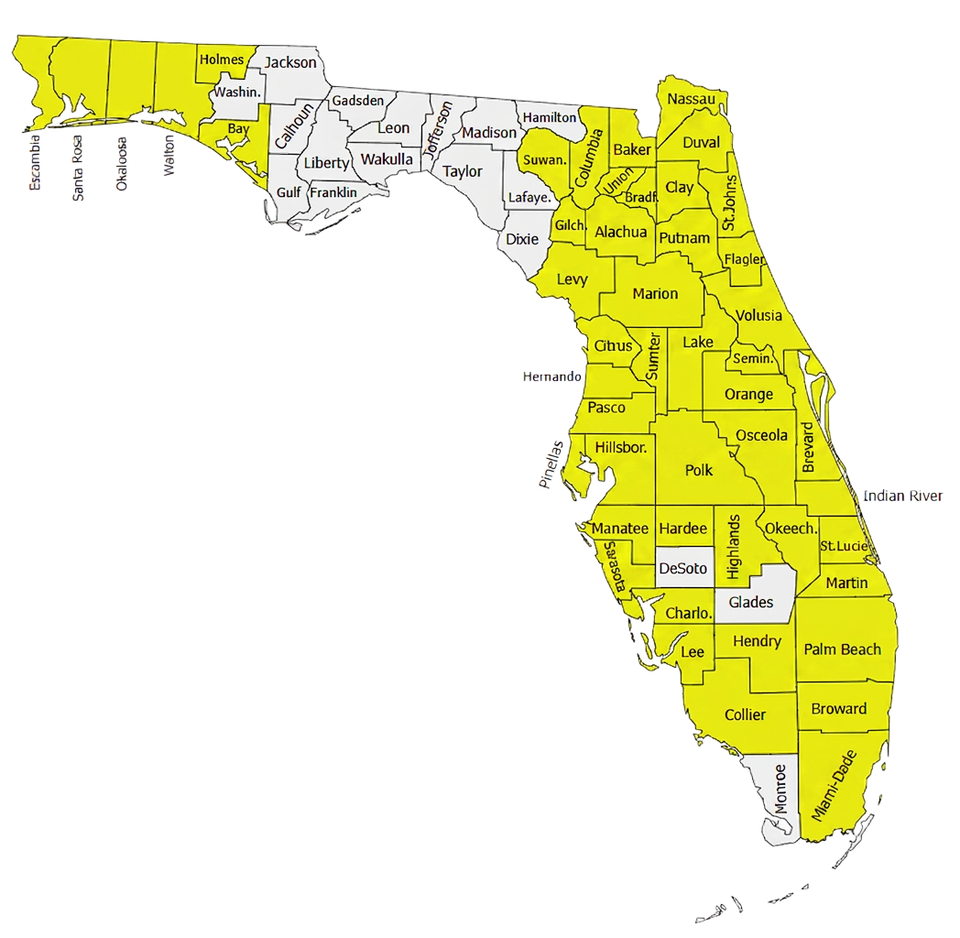
Florida-licensed physical therapists covering 50+ counties in Florida.
Our clinicians reach major metros and rural communities alike — from the Panhandle to the Keys. Patients are typically seen at home or at their workplace within 48 hours of a complete referral.
- Clinicians on our team
- Statewide
- Florida counties covered
- 50+